
Key Takeaways
- The Limited Liability Company (Jogapkärçiligi Çäklendirilen Jemgyýet) is the most commonly registered vehicle for private commercial activity in Turkmenistan, favored for its contained liability and relatively straightforward governance.
- Business entity registration in Turkmenistan falls under the authority of the Ministry of Finance and Economy, with entity conduct governed by the Civil Code and sector-specific legislation including the Law on Enterprises and the Law on Joint Stock Companies.
- Foreign firms can operate in Turkmenistan without incorporating locally by establishing a Branch Office or Representative Office, offering a lower-commitment market entry option.
- Turkmenistan's regulatory framework is gradually evolving to accommodate greater foreign investment, shaping the medium-term outlook for corporate registration in the jurisdiction.
Introduction to Entity Types in Turkmenistan
Turkmenistan is a landlocked Central Asian country bordered by Kazakhstan, Uzbekistan, Afghanistan, and Iran, with a western coastline along the Caspian Sea. It is an independent republic governed under a presidential system, and its economy remains heavily state-directed, with the hydrocarbons sector accounting for the dominant share of national output.
Business entity types in Turkmenistan are governed primarily by the Civil Code and a series of sector-specific laws, including the Law on Enterprises and the Law on Joint Stock Companies. Company registration falls under the authority of the Ministry of Finance and Economy of Turkmenistan, which oversees business registration and licensing functions.
The general tax posture is territorial and relatively high for commercial enterprises, with standard corporate income tax rates applicable to resident entities.
Structures available for registration include the Open Joint Stock Company, Closed Joint Stock Company, Limited Liability Company, General Partnership, Limited Partnership, Branch Office, Representative Office, State and Unitary Enterprise, and Sole Proprietorship. Each of these Turkmenistan corporate structures carries distinct liability, ownership, and operational implications that the sections below examine in detail.
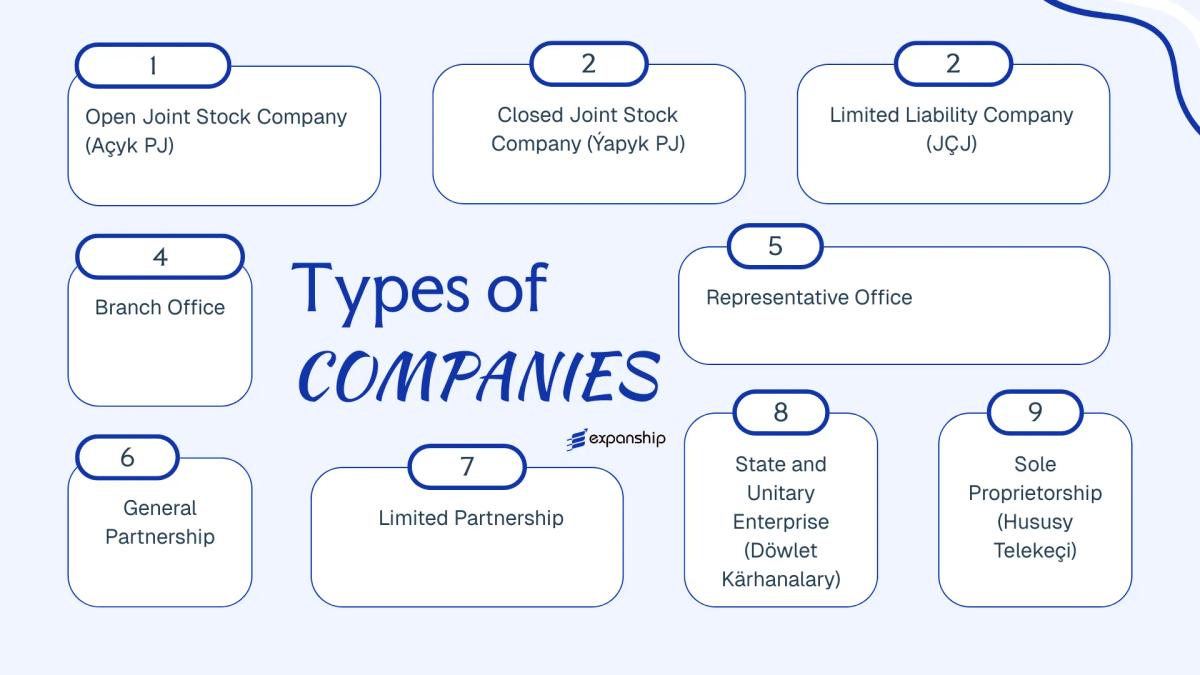
An Overview of Business Structures in Turkmenistan
Turkmenistan's company law framework offers several distinct legal entity forms, each governed primarily by the Civil Code of Turkmenistan and supplemented by sector-specific legislation such as the Law on Joint Stock Companies and the Law on Enterprises. The overview of business structures in Turkmenistan presented below covers every recognised form available to both domestic and foreign investors. Each structure carries different rules on liability, membership, and permitted activity.
Business Structures at a Glance
| Entity Type | Legal Form | Liability | Taxed / Exempt | Local Trading | Minimum Members | Regulatory Authority | Governing Act |
|---|---|---|---|---|---|---|---|
| Open JSC (Açyk PJ) | Public company | Limited to shares | Taxed | Yes | 3 shareholders | Ministry of Finance | Law on Joint Stock Companies |
| Closed JSC (Ýapyk PJ) | Private company | Limited to shares | Taxed | Yes | 1–50 shareholders | Ministry of Finance | Law on Joint Stock Companies |
| LLC (JÇJ) | Private limited | Limited to contribution | Taxed | Yes | 1–30 members | Ministry of Finance | Law on Enterprises |
| Branch Office | Foreign entity extension | Parent liable | Taxed | Restricted | N/A (parent company) | Ministry of Economy | Civil Code |
| Representative Office | Non-trading presence | Parent liable | Generally exempt | No | N/A (parent company) | Ministry of Economy | Civil Code |
| General Partnership | Unincorporated firm | Unlimited | Taxed | Yes | 2+ partners | Ministry of Finance | Civil Code |
| Limited Partnership | Mixed liability firm | General: unlimited; limited: capped | Taxed | Yes | 2+ partners | Ministry of Finance | Civil Code |
| State/Unitary Enterprise | State-owned entity | State liable | Taxed | Yes | N/A (state-owned) | Relevant ministry | Law on Enterprises |
| Sole Proprietorship (Hususy Telekeçi) | Individual trader | Unlimited personal | Taxed | Yes | 1 individual | Ministry of Finance | Civil Code |
Each of these structures is examined in full in the sections below.
Joint Stock Company (Açyk Paýdarlar Jemgyýeti / Open JSC and Ýapyk Paýdarlar Jemgyýeti / Closed JSC)
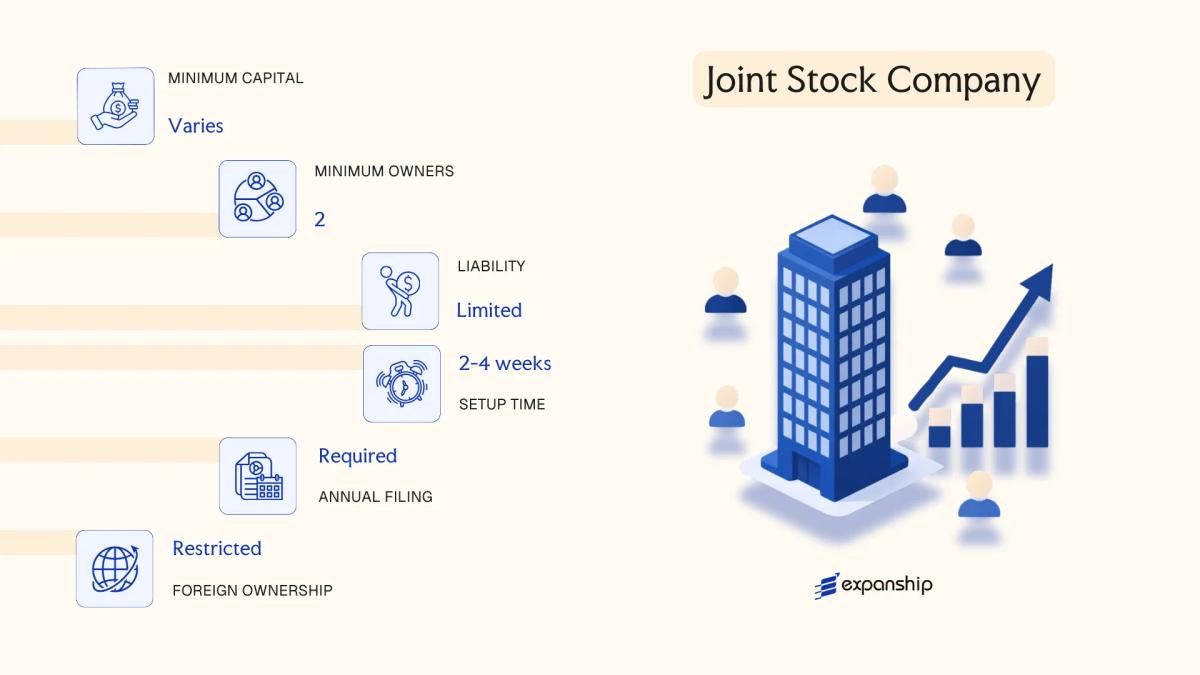
Governed primarily by the Law of Turkmenistan "On Joint Stock Companies and Protection of Shareholders' Rights" (1999, with subsequent amendments), the joint stock company Turkmenistan APJ YPJ framework establishes a distinct legal entity separate from its shareholders. Liability is limited to the value of shares held.
Share capital is divided into equal-denomination shares, which may be publicly traded or privately held depending on the sub-type. The Ministry of Finance oversees securities regulation, while company registration falls under the Ministry of Justice.
Key Characteristics
| Requirement | Detail | Notes |
|---|---|---|
| Legal Form | Joint Stock Company (APJ / YPJ) | Separate legal personality; shareholders not personally liable for company debts |
| Members | Shareholders; Board of Directors; Supervisory Board | Open JSC: no upper shareholder limit; Closed JSC: up to 50 shareholders |
| Local Presence | Registered legal address in Turkmenistan required | Physical office address; no statutory registered agent regime |
| Share Capital | Denominated in Turkmen Manat (TMT) | Minimum capital thresholds apply; shares must be fully subscribed at formation |
| Share Transfer | Open JSC: freely transferable; Closed JSC: restricted, existing shareholders hold pre-emption rights | Closed JSC shares cannot be publicly offered |
| Privacy | Shareholder register maintained; not fully public | Beneficial ownership disclosure requirements exist under anti-money laundering legislation |
Focus Points
- Taxation: Corporate profit tax applies at the standard rate; VAT registration obligations arise upon reaching the statutory turnover threshold; dividend distributions may attract withholding tax — consult the State Tax Service of Turkmenistan for current rates.
- Annual Compliance: Annual financial statements, shareholder meetings, and reporting to the Ministry of Finance (for securities matters) are mandatory.
- Conversion: An open JSC may be reorganised into a closed JSC or converted into a limited liability company through a formal shareholder resolution and re-registration process.
- Foreign Ownership: Foreign shareholders are permitted, subject to sector-specific restrictions in strategic industries.
- Securities Obligations: Open JSCs conducting public share offerings must comply with prospectus and disclosure rules administered by the relevant securities authority.
Sub-Types
Open Joint Stock Company (Açyk Paýdarlar Jemgyýeti — APJ)
An APJ may offer shares to an unrestricted number of investors and, subject to regulatory approval, list on a securities exchange. This structure suits larger enterprises seeking broad capital access.
Closed Joint Stock Company (Ýapyk Paýdarlar Jemgyýeti — YPJ)
A YPJ caps shareholders at 50 and prohibits public share offerings. Existing shareholders hold pre-emption rights over any share transfers, making this structure more suitable for closely held businesses where ownership control is a priority.
Recommendations
Both forms are used for medium-to-large commercial operations, joint ventures, and enterprises requiring a defined equity structure; the open form suits capital-intensive ventures, while the closed form carries the drawback of restricted transferability and a shareholder ceiling that limits future expansion of the ownership base.
JSC structures — particularly the closed form — are most appropriate for established businesses or joint ventures requiring formal equity arrangements and defined shareholder governance.

Company Incorporation in Turkmenistan
Expanship assists with end-to-end JSC formation in Turkmenistan, including document preparation, Ministry of Justice registration, and post-incorporation compliance setup.
Limited Liability Company (Jogapkärçiligi Çäklendirilen Jemgyýet)
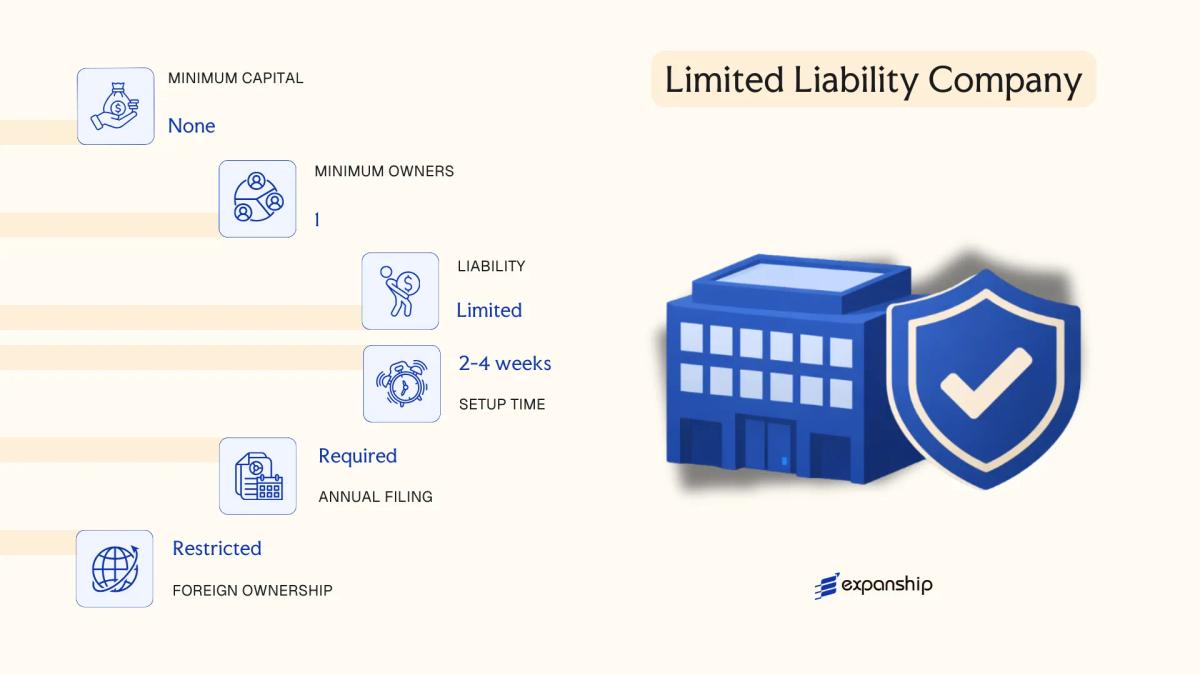
The limited liability company Turkmenistan JÇJ structure is governed by the Law of Turkmenistan "On Limited Liability Companies," which establishes the JÇJ as a distinct legal entity separate from its members. Liability is confined to each member's contribution to the charter capital, shielding personal assets from business obligations.
As a hybrid structure, the JÇJ combines corporate legal personality with a degree of organisational flexibility closer to a partnership than a public company. Jogapkärçiligi Çäklendirilen Jemgyýet registration requires submission to the State Registry under the Ministry of Justice, and the entity is then recognised as capable of holding property, entering contracts, and initiating legal proceedings in its own name.
Key Characteristics
| Requirement | Detail | Notes |
|---|---|---|
| Legal Form | Limited Liability Company (JÇJ) | Separate legal personality; liability limited to charter capital contributions |
| Members | 1–50 members | Referred to as "members" (participants); sole-member JÇJ is permitted |
| Management | Director (general director) | Members may also appoint a supervisory board for larger firms |
| Local Presence | Registered legal address required | Must be a physical address within Turkmenistan; no statutory registered agent requirement under current law |
| Capital | TMT-denominated charter capital | No statutory minimum publicly codified; must be defined in the charter and fully contributed per the founding agreement |
| Privacy | Member details filed with the State Registry | Information is not widely publicly searchable but is accessible to authorities |
Focus Points
- Taxation: Subject to corporate profits tax; VAT applies to taxable supplies; withholding tax applies to dividends, interest, and royalties paid to non-residents; stamp duties may apply to certain transactional documents.
- Annual Compliance: Annual financial statements must be prepared; tax returns filed with the State Tax Service; charter amendments require re-registration.
- Economic Substance: No formalised economic substance regime equivalent to offshore jurisdictions; however, genuine business activity is expected for tax residency purposes.
- Treaty Access: Turkmenistan has concluded a limited number of double taxation agreements; treaty benefits for a JÇJ depend on residency status and the counterparty jurisdiction.
- Restrictions: Foreign ownership is permitted in most sectors, though certain strategic industries require prior governmental approval or impose ownership caps.
Closing
LLC formation in Turkmenistan through the JÇJ structure suits trading operations, joint ventures, and foreign-owned subsidiaries where liability containment and operational control are priorities. The structure offers flexibility in internal governance through its charter, but the limited secondary market for membership interests can restrict exit options for investors.
The JÇJ is best suited to foreign investors and domestic entrepreneurs seeking a contained, operationally active presence with defined liability boundaries and direct management control.
Foreign Business Structures in Turkmenistan [Branch Office, Representative Office]
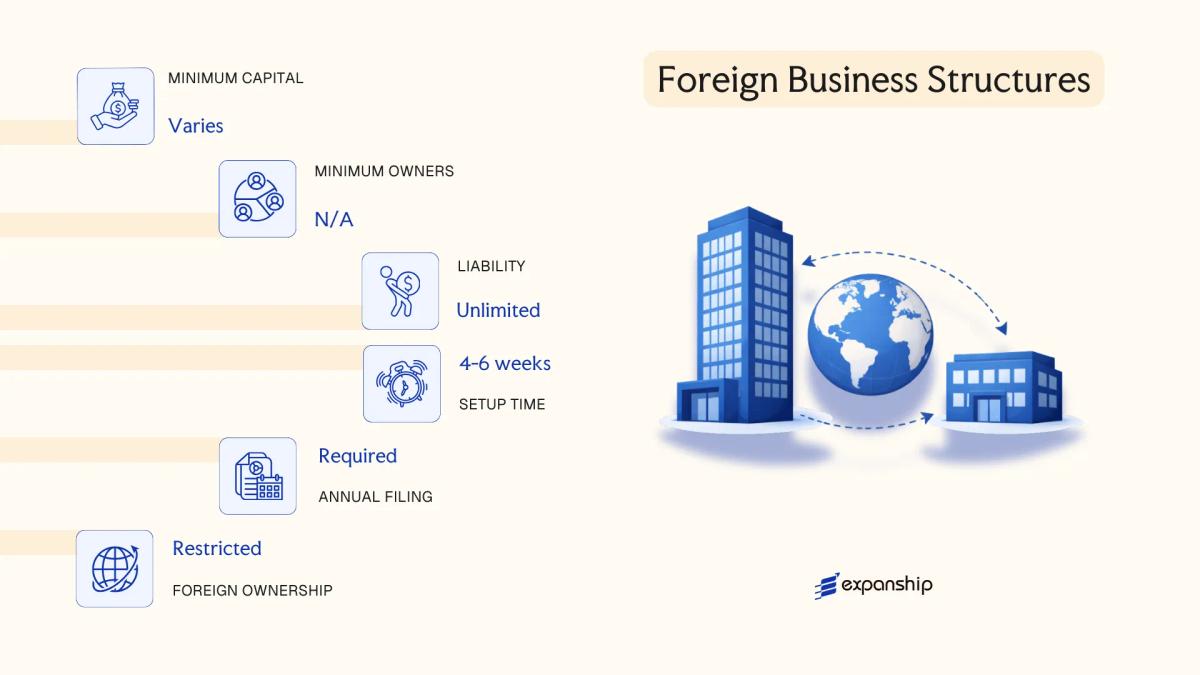
Foreign companies seeking a presence without incorporating a separate legal entity have two principal options under Turkmenistan's Law on Foreign Investment and the Civil Code: a branch office or a representative office. Neither structure constitutes an independent legal entity. Both operate as extensions of the parent company, which retains full legal and financial responsibility for their activities.
Registration for both structures is administered through the Ministry of Finance and Economy of Turkmenistan, and foreign companies must obtain accreditation before commencing operations. A foreign company branch office in Turkmenistan may conduct commercial activity directly, while a representative office is restricted to non-commercial functions such as market research, liaison, and promotion of the parent's interests.
Key Characteristics
| Requirement | Branch Office | Representative Office |
|---|---|---|
| Legal Personality | None — extension of parent company | None — extension of parent company |
| Permitted Activities | Commercial and operational activity | Non-commercial only (liaison, marketing, research) |
| Liability | Parent company bears full liability | Parent company bears full liability |
| Local Presence | Registered address in Turkmenistan required | Registered address in Turkmenistan required |
| Head of Office | Appointed representative acting under notarised power of attorney | Appointed representative acting under notarised power of attorney |
| Capital Requirement | No statutory minimum; parent's capital applies | No statutory minimum |
Focus Points
- Taxation: Branch profits are subject to corporate profit tax at the standard rate of 8%; representative offices engaged in non-commercial activity generally fall outside the corporate tax base, though VAT obligations may still apply depending on services received.
- Economic Substance: Both structures must maintain a physical office and an accredited head of office in-country; shell-like arrangements without genuine local operations attract scrutiny.
- Annual Compliance: Accreditation requires periodic renewal; branches must file annual financial statements with the relevant authorities, while representative offices have lighter reporting obligations.
- Restrictions: Representative offices are prohibited from generating revenue or entering into commercial contracts in their own capacity.
- Treaty Access: As extensions of the parent, both structures may access double tax treaty benefits available to the parent company's home jurisdiction, subject to treaty terms.
Sub-Types
Branch Office
Operates as the parent company's commercial arm and may execute contracts, invoice clients, and generate revenue directly. Used primarily by foreign firms in energy, construction, and services sectors that require active operations rather than a passive market presence.
Representative Office
Functions solely as a liaison and promotional presence. Commonly used during market-entry phases or by firms that do not yet require revenue-generating operations but wish to establish contacts and gather market intelligence.
Closing Remarks
Both structures suit foreign companies that prefer not to establish a separate locally incorporated entity, particularly for initial market entry or project-specific work. The branch offers direct operational capability, while the representative office carries strict activity limitations that constrain its commercial utility.
A branch office is best suited to foreign companies with confirmed commercial activity in Turkmenistan, such as those executing energy or infrastructure contracts; a representative office fits firms still assessing the market without immediate revenue intentions.
Partnerships in Turkmenistan [General Partnership, Limited Partnership]
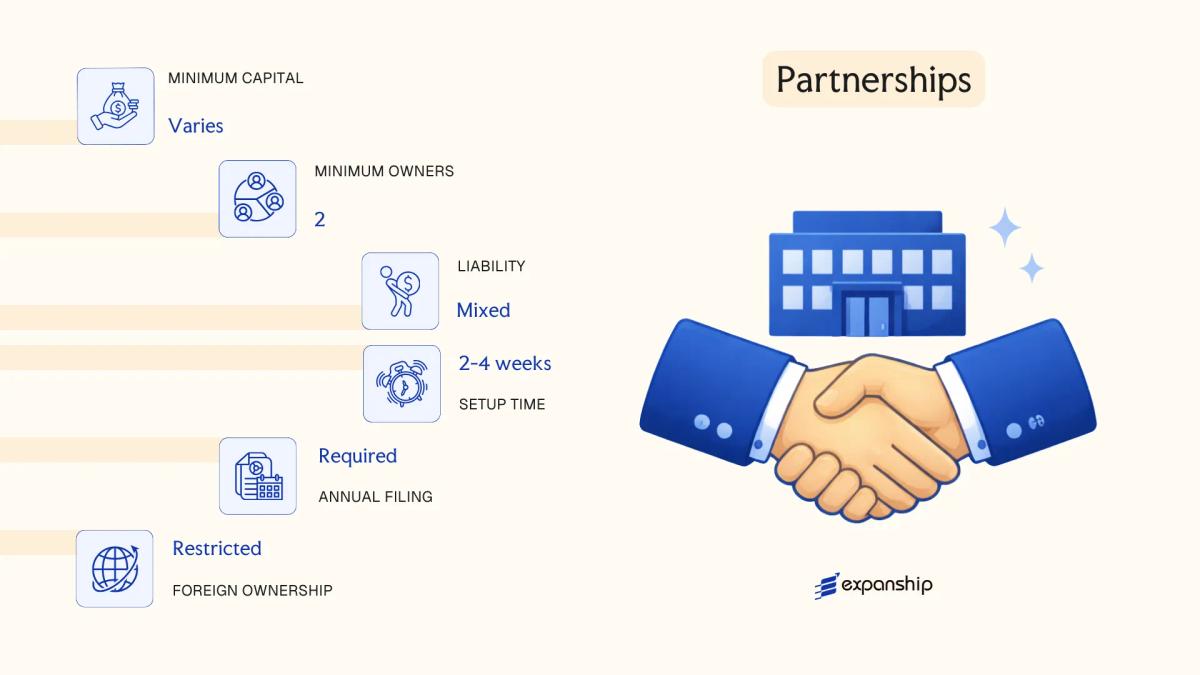
Regulated under the Civil Code of Turkmenistan and complementary commercial legislation, the partnership business structure Turkmenistan recognises follows two distinct legal forms: the general partnership (Doly Paýdarlar Jemgyýeti) and the limited partnership (Goýumly Jemgyýet). Both structures carry separate legal personality and are registered through the Ministry of Justice. Neither form is widely used in commercial practice, as the LLC structure tends to be preferred by private investors.
Liability exposure differs sharply between the two forms. In a general partnership, all partners bear unlimited joint liability for the firm's obligations. The limited variant introduces a two-tier membership structure, separating partners with unlimited liability from contributors whose exposure is capped at their capital contribution.
Key Characteristics
| Requirement | General Partnership | Limited Partnership |
|---|---|---|
| Legal Form | Separate legal entity | Separate legal entity |
| Members | Partners (minimum 2, no statutory maximum) | At least 1 general partner + 1 limited partner (contributor) |
| Liability | Unlimited, joint and several for all partners | General partners: unlimited; contributors: limited to contribution |
| Local Presence | Registered legal address required | Registered legal address required |
| Capital | No statutory minimum; denominated in Turkmenistan manat | No statutory minimum; denominated in Turkmenistan manat |
| Privacy | Partner names appear in registration records | Partner names appear in registration records |
Focus Points
- Taxation: Profits are generally subject to corporate income tax at the standard rate; VAT and withholding tax obligations apply on distributions and cross-border payments per standard domestic rules.
- Annual Compliance: Registered partnerships must file financial statements and maintain accounting records under Turkmen accounting standards.
- Treaty Access: Access to Turkmenistan's double tax treaty network depends on residency status and the nature of income derived.
- Restrictions: Foreign nationals may face limitations on acting as general partners; legal confirmation of eligibility is advisable before structuring.
- Conversion: Conversion to an LLC or JSC is permitted under general civil law provisions, subject to re-registration with the Ministry of Justice.
Sub-Types
General Partnership (Doly Paýdarlar Jemgyýeti)
Every participant holds equal management rights and bears unlimited personal liability for partnership debts, making this form unsuitable where liability protection is a priority.
Limited Partnership (Goýumly Jemgyýet)
This structure permits passive investors (contributors) to participate without assuming management responsibility, while at least one general partner retains full personal liability and operational control.
Partnerships are occasionally used for professional services arrangements or joint ventures between a small number of known parties. The primary advantage is operational flexibility in profit allocation; the significant drawback is the unlimited personal liability carried by general partners.
This structure suits closely held arrangements between trusted counterparties who require flexible profit-sharing and can accept personal liability exposure.
State and Unitary Enterprises (Döwlet Kärhanalary)
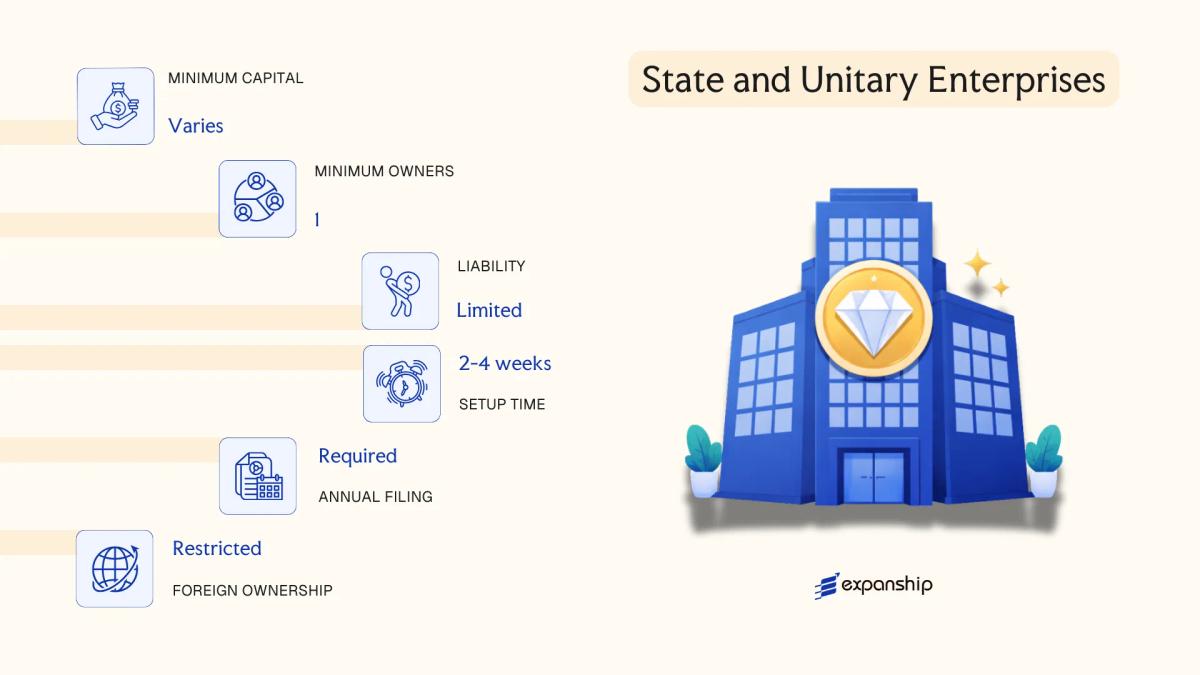
A state unitary enterprise Turkmenistan Döwlet Kärhanalary is a government-owned commercial entity established under the Civil Code of Turkmenistan and governed by sector-specific legislation administered through relevant ministries. Unlike privately held entities, this structure does not issue shares; ownership remains exclusively with the state, represented either by the central government or a subordinate public authority.
The enterprise holds separate legal personality, meaning it can enter contracts, hold assets, and bear obligations in its own name. Liability, however, is structured around the principle of limited state responsibility, where the founding body retains ultimate budgetary authority over the entity's obligations within defined parameters.
Key Characteristics
| Requirement | Detail | Notes |
|---|---|---|
| Legal Form | Unitary enterprise with separate legal personality | No share capital; assets are state property assigned to the entity |
| Governing Body | Director appointed by the founding ministry or state authority | No board of shareholders; management accountability runs to the founding body |
| Ownership | 100% state-owned | Private participation is not permitted under this structure |
| Local Presence | Registered office required within Turkmenistan | Physical operational presence expected; registration through Ministry of Justice |
| Capital | Assigned state property rather than subscribed capital | No minimum monetary capital threshold as with private entities |
| Privacy | Limited; government ownership and management appointments are publicly traceable | Records held with state registry authorities |
Focus Points
- Taxation: Subject to corporate profit tax under Turkmenistan's tax legislation; VAT obligations apply where applicable; specific sectoral tax regimes may govern enterprises in energy or utilities.
- Annual Compliance: Required to submit financial statements to the founding ministry and state statistical authorities; audits may be mandated by the supervising body.
- Restrictions: Private investors cannot hold ownership interests; the structure is closed to foreign equity participation.
- Conversion: Converting a unitary enterprise into a private commercial entity requires legislative or executive authorisation from the founding authority.
- Treaty Access: Access to double tax treaty benefits is limited in practice, as these entities typically operate outside standard bilateral investment frameworks.
Sub-Types
State Enterprise (Döwlet Kärhanalary)
Funded entirely from the state budget, this variant operates in sectors of strategic national interest such as energy, utilities, and infrastructure. Management decisions require ministerial approval, and surplus revenues flow back to the state budget.
Municipal Unitary Enterprise
Established by local government authorities rather than the central state, this sub-type delivers public services at the regional or city level. Its founding body is the relevant municipal administration rather than a national ministry.
Closing
This structure suits government-mandated operations in strategic sectors where private ownership is restricted by policy or law, with the principal advantage being direct state backing; the key limitation is the complete absence of private investment capacity.
Best suited for public-sector entities, state agencies, or government partners operating under a mandate from a Turkmenistani ministry or municipal authority.
Sole Proprietorship (Hususy Telekeçi)
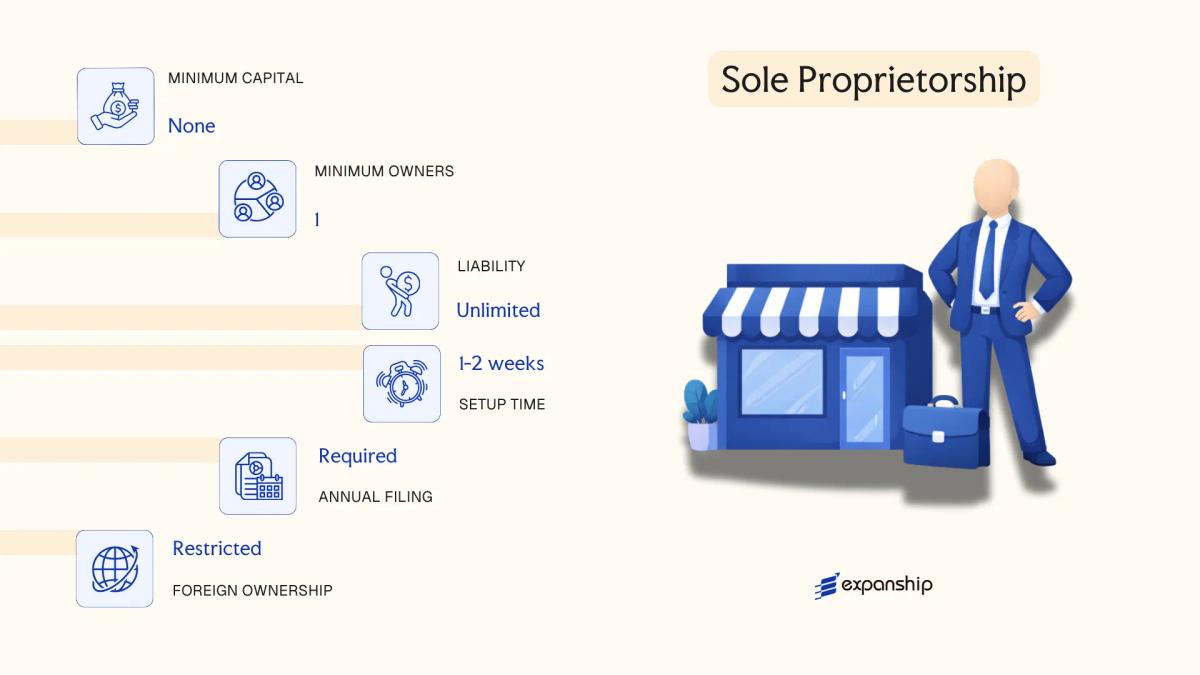
Governed by the Law of Turkmenistan "On State Support for Small and Medium Entrepreneurship" and the broader Civil Code framework, the sole proprietorship Turkmenistan Hususy Telekeçi structure is the most accessible entry point for individual business activity. It does not constitute a separate legal entity; the proprietor and the business are one and the same in law, meaning personal assets are exposed to business liabilities without limitation.
Registration is handled through the Ministry of Finance and Economy or its designated local bodies, with the application submitted at the district-level executive authority where the individual resides. Upon approval, the entrepreneur receives a state registration certificate confirming their status as an individual entrepreneur.
Key Characteristics
| Requirement | Detail | Notes |
|---|---|---|
| Legal Form | Individual Entrepreneur (no separate legal personality) | Proprietor and business are legally unified |
| Member Title | Proprietor / Individual Entrepreneur | Single natural person only; no joint ownership |
| Membership | 1 natural person (minimum and maximum) | Must be a resident individual; foreign nationals face restrictions |
| Local Presence | Registered residential or business address in Turkmenistan | Must correspond to the registration district |
| Capital | No statutory minimum capital required | Business assets are personal assets |
| Privacy | Name of proprietor appears in public registration records | No meaningful separation between owner identity and business |
Focus Points
- Taxation: Subject to simplified or general income tax depending on turnover thresholds; VAT registration may apply above certain revenue levels; no separate corporate tax applies since profits are taxed as personal income.
- Annual Compliance: Filing of annual income declarations with tax authorities; no separate financial statements required at the entity level.
- Restrictions: Foreign nationals are generally prohibited from registering as individual entrepreneurs without permanent residency; activity scope may be limited by licence requirements for certain sectors.
- Conversion: Can be converted into a Limited Liability Company if the business outgrows the sole trader structure, though the process requires fresh entity registration rather than a direct transformation mechanism.
- Economic Substance: No formal substance requirements apply at this level, but physical presence in the registration district is expected.
Closing Paragraph
The Hususy Telekeçi structure suits low-volume trading, freelance services, and small retail operations where administrative overhead must remain minimal. The absence of a capital requirement makes entry straightforward, but unlimited personal liability is a significant structural constraint that limits its suitability as a business scales.
Resident individuals operating small-scale, single-owner service or retail businesses who require a simple registration framework and do not anticipate significant liability exposure.
How to Choose the Right Entity Type in Turkmenistan
Choosing the right company structure in Turkmenistan affects your tax position, liability exposure, operational permissions, and long-term compliance obligations from the moment of registration.
Why Your Entity Choice Matters
The consequences of selecting an unsuitable structure are concrete and measurable:
- Forming a branch office when you intend to conduct independent commercial activity creates a mismatch with the Civil Code's requirements, exposing the parent company to liability for obligations it did not directly assume.
- Selecting a structure without legal capacity to enter contracts in your own name — such as a representative office — and then transacting commercially constitutes unauthorized business activity under Turkmen law.
- Registering as a sole proprietor (Hususy Telekeçi) when your activity requires a licensed corporate entity results in operating without the mandatory licence, which carries administrative penalties and potential suspension of activity.
- Choosing a closed JSC structure when a single-member LLC is sufficient adds shareholder meeting and share registry obligations that generate annual administrative costs without corresponding benefit.
Key Factors to Consider
- Business Activity: Active trading, asset holding, and regulated sectors each require different legal forms under the Law of Turkmenistan on Enterprises.
- Ownership Structure: A sole owner with no intention to admit investors suits an LLC; multi-party ventures with transferable equity require a JSC.
- Liability Exposure: Your personal risk tolerance determines whether unlimited partnership liability is acceptable or whether a separate legal entity is necessary.
- Regulatory Permissions: Certain licensed activities are only accessible to specific entity types recognized by the relevant sectoral regulator.
- Operational Footprint: Whether your firm needs a permanent establishment with staff or only a representational presence shapes the choice between a registered entity and a representative office.
- Exit and Conversion: Not all structures permit redomiciliation or conversion; confirm your intended exit mechanism before registration.
The primary legislation governing company formation is the Law of Turkmenistan on Enterprises, available through the Ministry of Justice's official legal database.
Corporate Compliance Services in Turkmenistan
Ongoing compliance support for companies registered in Turkmenistan, including annual filings, reporting obligations, and regulatory monitoring.
Conclusion
Turkmenistan company formation summary points toward a jurisdiction where structural choice carries real regulatory weight. The Limited Liability Company remains the most commonly registered vehicle for private commercial activity, favored by both domestic entrepreneurs and foreign-linked ventures for its contained liability and relatively straightforward governance. Open Joint Stock Companies suit larger enterprises seeking capital from a broad shareholder base, while the Closed JSC fits tightly held groups preferring restricted share transfers. Branch and representative offices serve foreign firms testing the market without committing to a locally incorporated entity. General and limited partnerships, along with sole proprietorships, address smaller-scale or individually operated activity.
Incorporating in Turkmenistan key takeaways center on the Ministry of Finance and Economy's role as the primary registration authority and compliance with the Civil Code governing entity conduct. The regulatory framework continues to evolve, with gradual steps toward greater foreign investment accommodation shaping the medium-term outlook for corporate registration.
How Expanship Can Assist You
Expanship company registration Turkmenistan services are built around the specific structures examined in this guide — from the Closed JSC governed under Turkmen civil and commercial legislation to the LLC registered with the Ministry of Justice. Each entity type carries distinct filing obligations, and our team works directly with the relevant authorities to keep your formation on track.
From initial document preparation to post-incorporation requirements, Expanship covers the full scope of your setup:
- Document preparation and notarization
- Registered agent and local office provision
- Government filings and Ministry of Justice liaison
- Post-incorporation compliance management
- Banking introduction assistance
Turkmenistan entity formation involves sequential approvals that require precise coordination. Our team manages that process on your behalf, so your structure is correctly established from the outset.
Reach out through Expanship Turkmenistan to discuss your requirements.
Frequently Asked Questions (FAQ)
The Limited Liability Company (Jogapkärçiligi Çäklendirilen Jemgyýet) is the most frequently established structure, largely because it combines capped member liability with comparatively straightforward registration procedures. Its minimum capital threshold and flexible internal governance make it the default choice for small to mid-sized private ventures.
A branch office has no separate legal personality and remains fully liable under its parent entity, while an LLC is an independent legal person under Turkmen law. Branches cannot independently hold property or enter contracts in their own name, whereas an LLC can. Compliance obligations for branches are generally narrower but offer less operational autonomy.
The Closed Joint Stock Company (Ýapyk Paýdarlar Jemgyýeti) restricts share transfers and limits the public disclosure of shareholder information compared to its open counterpart. Shareholder registers are not broadly published, though beneficial ownership details may still be accessible to regulatory authorities. Nominee arrangements are not explicitly regulated under current law, so their practical availability should be verified on a case-by-case basis.
No. General and Limited Partnerships require a minimum of two participants by definition, as the structure is inherently multi-party. A Sole Proprietorship (Hususy Telekeçi) and an LLC can each be formed by a single individual, subject to registration requirements under the relevant legislation.
Foreign nationals and foreign legal entities may establish LLCs, Open and Closed JSCs, and branch or representative offices. Registration typically requires approval from the Ministry of Finance or the relevant sectoral authority, depending on the activity type. Sole Proprietorships are generally reserved for Turkmen citizens or permanent residents.
The Civil Code of Turkmenistan provides a general basis for reorganisation, including transformation from one entity form to another, though procedural requirements vary. An LLC may generally be reorganised into a JSC, subject to meeting the capital and shareholder thresholds applicable to the target structure. Conversion involving state-owned enterprises typically requires additional governmental authorisation.
Not all. LLCs, JSCs, and state unitary enterprises are recognised as independent legal persons under Turkmen law. General partnerships, limited partnerships, and sole proprietorships do not carry full separate legal personality, meaning personal assets of participants may be exposed to business liabilities.
Understanding the distinctions between these structures is the first step; navigating the registration process itself requires accurate, up-to-date guidance on local procedural requirements — an area where specialist support from a firm with direct jurisdiction access can reduce material risk.
Legal Disclaimer
The information provided in this article is for general informational purposes only and does not constitute legal, tax, or professional advice. While we strive to ensure the accuracy and timeliness of the content, laws and regulations are subject to change, and the application of laws can vary widely based on specific facts and circumstances.
Readers should not act upon this information without seeking professional counsel tailored to their individual situation. Expanship and its authors disclaim any liability for actions taken or not taken based on the content of this article.
For specific advice regarding your business setup, compliance requirements, or any legal matters, please consult with qualified legal and tax professionals in the relevant jurisdiction.