

Key Takeaways
- The private limited company (Ltd) is the most commonly registered entity in Malawi, offering liability protection and a flexible share structure suited to both resident and foreign investors.
- Corporate registration and governance in Malawi fall under the Registrar of Companies, which operates within the Ministry of Justice and Constitutional Affairs.
- Business structures in Malawi are governed primarily by the Companies Act 2013 and the Business Registration Act, with each entity type carrying distinct implications for liability, taxation, and compliance.
- Foreign firms seeking market entry without establishing a separate legal entity may register as a branch office or external company under Malawi's available foreign entity forms.
Introduction to Entity Types in Malawi
Malawi is a landlocked country in southeastern Africa, bordered by Tanzania, Zambia, and Mozambique. It is an independent republic and a member of the Common Market for Eastern and Southern Africa (COMESA) and the Southern African Development Community (SADC). Company registration and corporate governance fall under the authority of the Registrar of Companies, which operates within the Ministry of Justice and Constitutional Affairs. The country applies a residence-based tax system, meaning registered entities are taxed on income sourced within its borders.
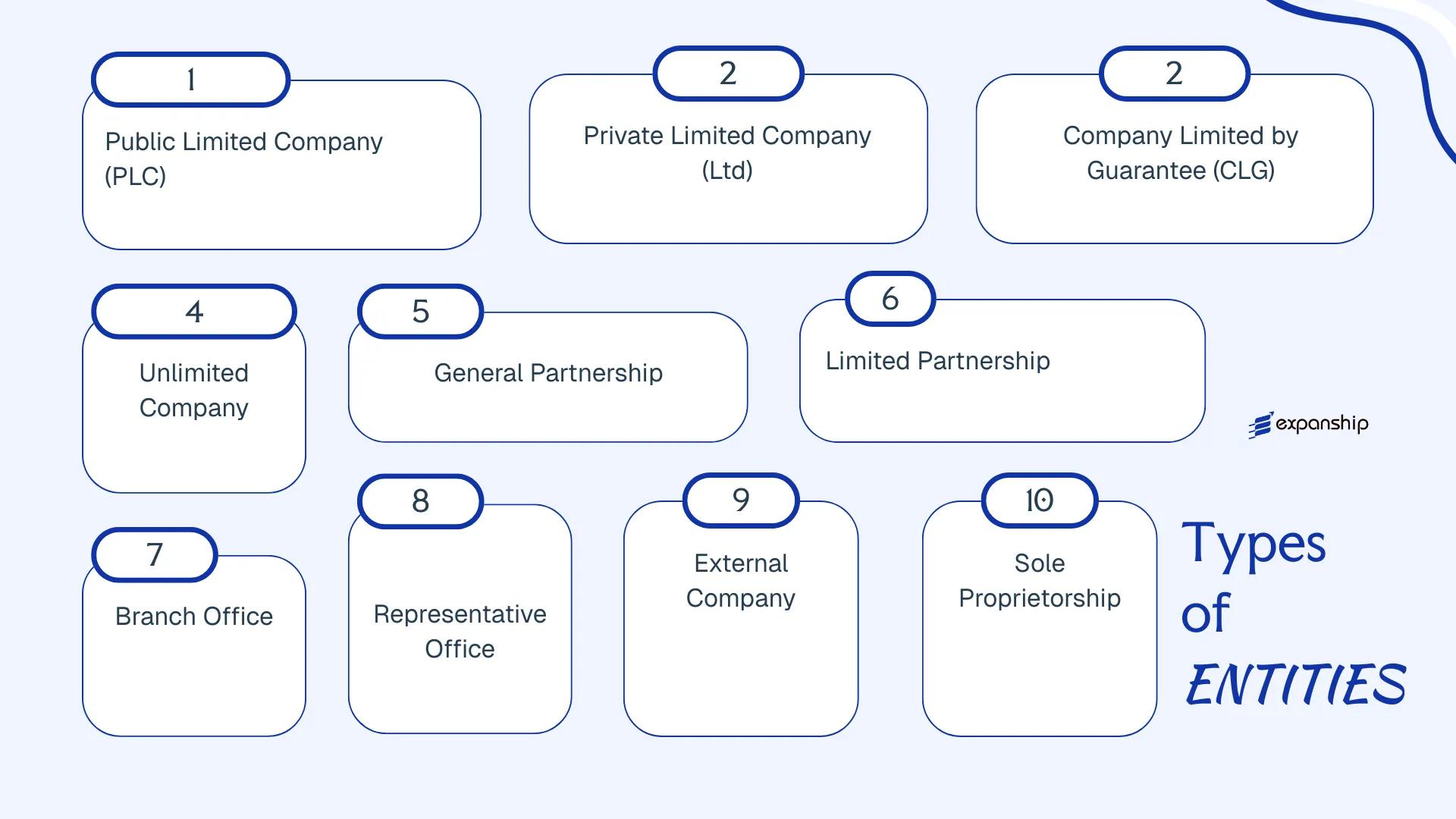
Understanding the types of business entities in Malawi is foundational to structuring any commercial or investment activity in the country. The primary corporate structures available include the Public Limited Company, Private Limited Company, Company Limited by Guarantee, Unlimited Company, General Partnership, Limited Partnership, Sole Proprietorship, and various foreign entity forms such as branch offices and external companies.
Each structure carries distinct implications for liability, governance, ownership, and tax treatment. This article examines each option in detail to help your business identify the most appropriate vehicle for operating in this jurisdiction.
An Overview of Business Structures in Malawi
Malawi offers several distinct business structures available in Malawi, each governed primarily by the Companies Act 2013 (as revised), which is administered by the Registrar General under the Ministry of Justice and Constitutional Affairs. The Business Registration Act 2012 also applies to certain unincorporated forms, including sole traders and partnerships. Each structure carries different implications for liability, taxation, membership, and permitted activities.
Business Structures at a Glance
| Entity Type | Legal Form | Liability | Taxed / Exempt | Local Trading | Minimum Members | Regulatory Authority | Governing Act |
|---|---|---|---|---|---|---|---|
| Public Limited Company (PLC) | Incorporated company | Limited to shares | Taxable | Yes | 2 shareholders | Registrar General | Companies Act 2013 |
| Private Limited Company (Ltd) | Incorporated company | Limited to shares | Taxable | Yes | 1 shareholder | Registrar General | Companies Act 2013 |
| Company Limited by Guarantee | Incorporated company | Limited to guarantee | Taxable / Exempt | Yes | 1 member | Registrar General | Companies Act 2013 |
| Unlimited Company | Incorporated company | Unlimited | Taxable | Yes | 1 shareholder | Registrar General | Companies Act 2013 |
| General Partnership | Unincorporated firm | Unlimited, joint | Taxable | Yes | 2 partners | Registrar General | Business Registration Act 2012 |
| Limited Partnership | Unincorporated firm | Mixed liability | Taxable | Yes | 2 partners | Registrar General | Business Registration Act 2012 |
| Branch Office | Foreign entity extension | Parent liable | Taxable | Yes | N/A | Registrar General | Companies Act 2013 |
| Representative Office | Foreign entity presence | Parent liable | Generally exempt | Restricted | N/A | Registrar General | Companies Act 2013 |
| External Company | Registered foreign entity | Varies | Taxable | Yes | N/A | Registrar General | Companies Act 2013 |
| Sole Proprietorship | Unincorporated individual | Unlimited | Taxable | Yes | 1 owner | Registrar General | Business Registration Act 2012 |
Each of these structures is examined in full in the sections below.
Public Limited Company (PLC) Under the Malawi Companies Act
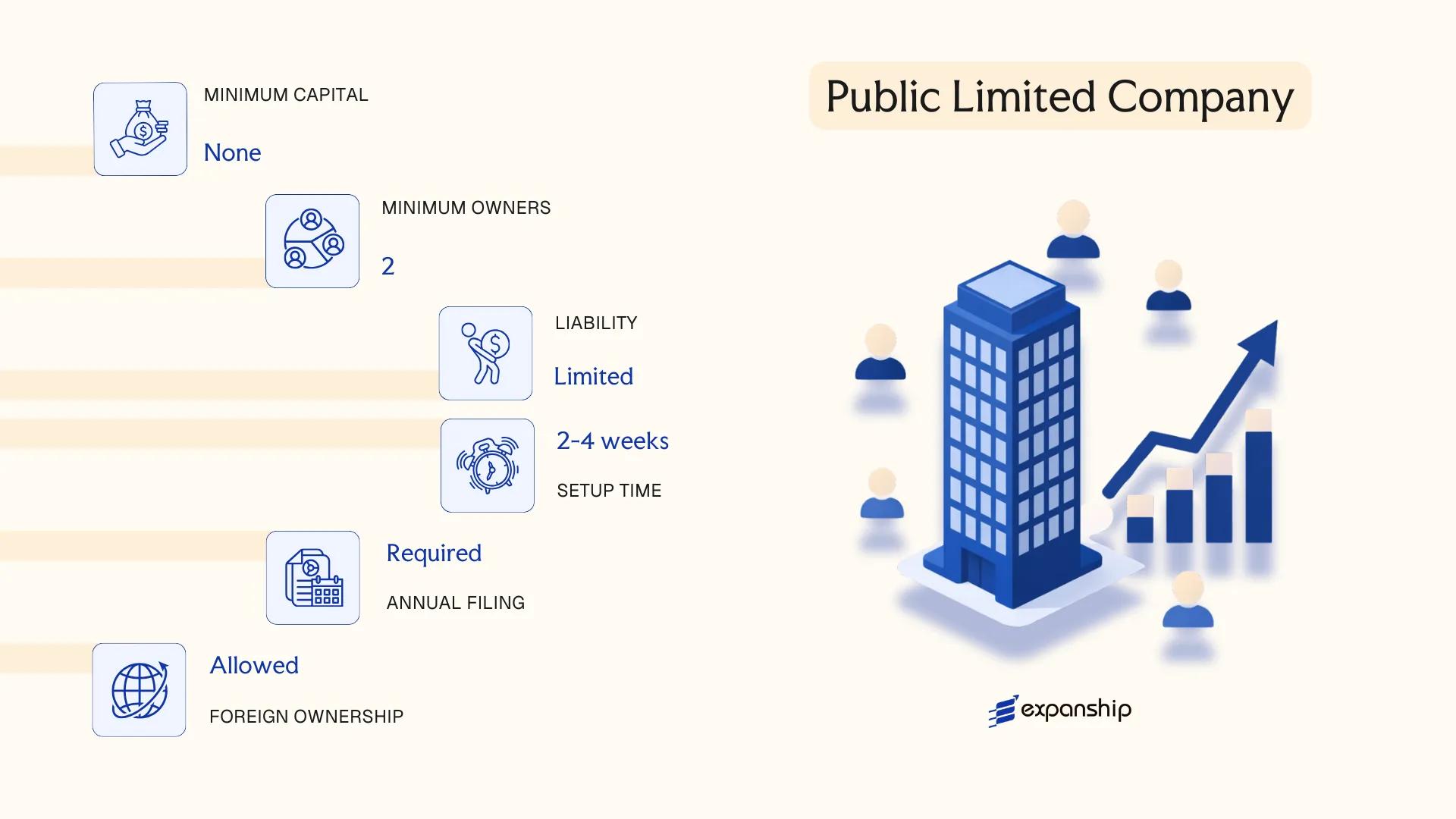
A public limited company (PLC) in Malawi is governed by the Companies Act 2013, which consolidated and modernised the earlier corporate legislation. The entity holds a separate legal personality from its shareholders, meaning it can own assets, enter contracts, and incur liabilities in its own name. Shareholder liability is limited to the amount unpaid on their shares.
Designed primarily for large-scale commercial operations or ventures seeking public capital, a PLC may offer its shares to the public and apply for listing on the Malawi Stock Exchange (MSE). Malawi public limited company PLC registration requires meeting stricter governance and disclosure standards than a private company.
Key Characteristics
| Requirement | Detail | Notes |
|---|---|---|
| Legal Form | Public Limited Company (PLC) | Incorporated under the Companies Act 2013 |
| Members | Shareholders; minimum 2, no maximum | Directors: minimum 2; at least one must be ordinarily resident in Malawi |
| Local Presence | Registered office in Malawi | Must maintain a physical registered address; a company secretary is required |
| Capital | MWK-denominated; no statutory minimum share capital | Authorised and issued capital stated in articles; sufficient capital for intended operations is expected |
| Disclosure | Annual financial statements must be audited and filed with the Registrar of Companies | Accounts are publicly accessible upon filing |
Focus Points
- Taxation: Subject to corporate income tax (standard rate 30% for resident companies); VAT registration required once turnover thresholds are met; withholding tax applies to dividends, interest, and service fees — see Malawi Revenue Authority for current rates.
- Annual Compliance: Must hold an Annual General Meeting (AGM), file annual returns, and submit audited financial statements to the Registrar of Companies.
- Stock Exchange Listing: PLCs seeking a listing must satisfy the MSE's additional eligibility criteria, including minimum capital, shareholder spread, and ongoing disclosure obligations.
- Conversion: A PLC may re-register as a private limited company under the Companies Act 2013, subject to shareholder approval and Registrar consent.
- Restrictions: Certain regulated sectors (banking, insurance, telecommunications) require additional licensing from sector-specific regulators before a PLC can operate.
Closing
A PLC suits businesses that intend to raise capital from the public, establish a listed presence, or operate at a scale requiring broad shareholder participation. The principal advantage is unrestricted public share issuance; the corresponding limitation is the administrative and disclosure burden, which is considerably heavier than that carried by a private company.
PLCs are most appropriate for large enterprises, joint ventures with public-interest objectives, or businesses planning to list on the Malawi Stock Exchange.

Company Incorporation in Malawi
Expanship assists with end-to-end PLC registration and compliance setup under the Malawi Companies Act 2013.
Private Limited Company (Ltd) Under the Malawi Companies Act
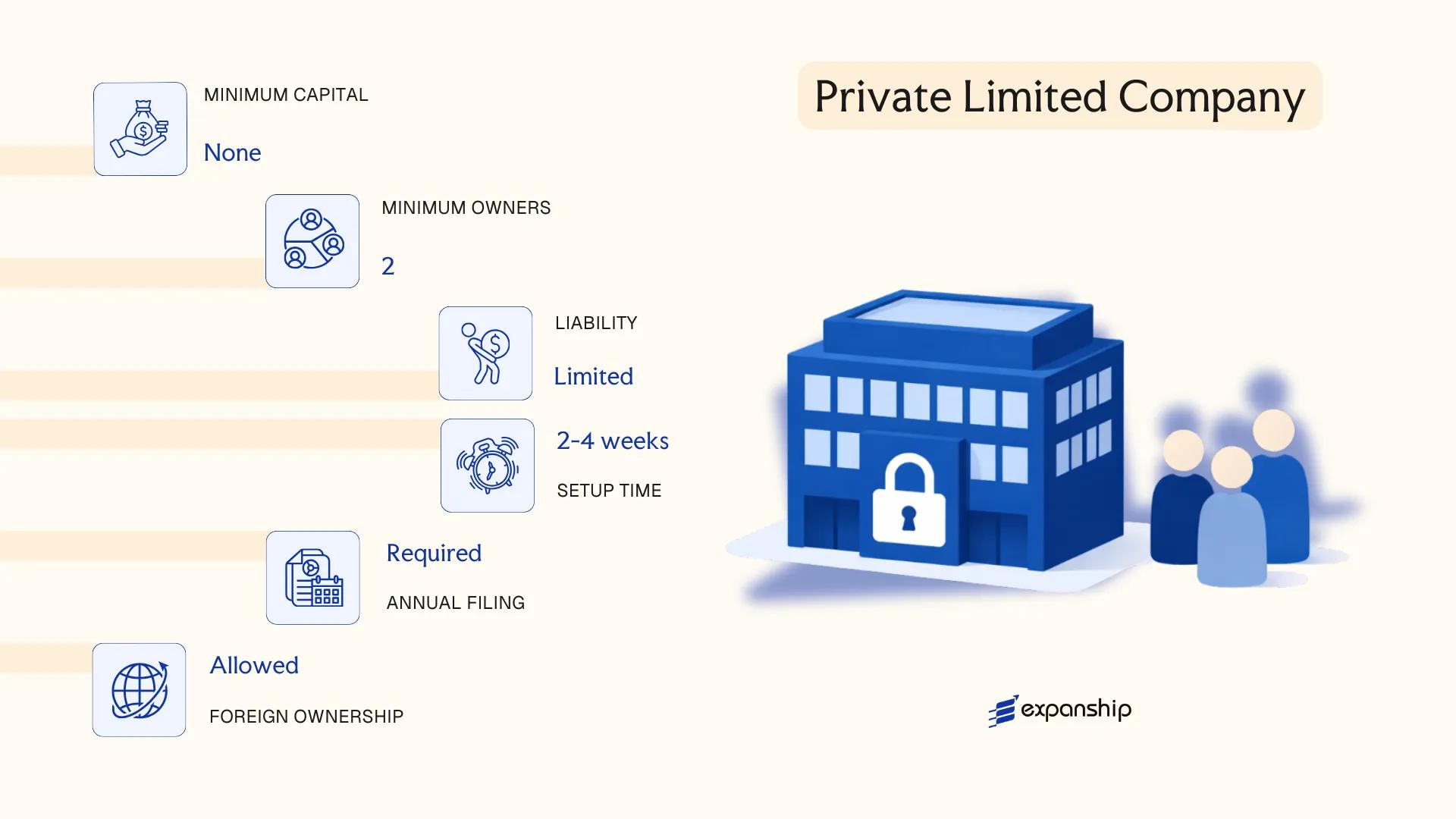
A Malawi private limited company (Ltd) formation is governed by the Companies Act 2013, which replaced the earlier 1984 legislation and modernised the statutory framework for corporate entities. The Ltd structure carries separate legal personality, meaning the company exists independently of its shareholders, and liability is limited to the amount unpaid on shares.
| Requirement | Detail | Notes |
|---|---|---|
| Legal Form | Private Company Limited by Shares | Incorporated under the Companies Act 2013 |
| Members | Directors: minimum 1; Shareholders: minimum 1, maximum 50 | Corporate directors permissible; shareholders may be individuals or entities |
| Local Presence | Registered office address required within Malawi | Registered Agent not statutorily mandated, but a local address must be maintained |
| Capital | MWK; no statutory minimum share capital | Shares must be fully described in the Articles; par value shares are common in practice |
| Privacy | Beneficial ownership disclosure required at registration | Shareholder register is accessible to regulatory authorities |
Focus Points
- Taxation: Subject to corporate income tax at the standard rate; VAT registration required once turnover thresholds are met; withholding tax applies to dividends, interest, and royalties paid to non-residents.
- Annual Compliance: Annual returns and audited financial statements must be filed with the Registrar of Companies.
- Treaty Access: Malawi maintains a limited network of double taxation agreements; treaty benefits depend on residency determination.
- Restrictions: Private companies are prohibited from offering shares to the public and must restrict share transfers in their Articles.
- Conversion: A private company may re-register as a public company under Part IV of the Companies Act 2013, subject to member approval and regulatory filing.
Closing
The private limited company suits trading operations, holding structures, and locally regulated businesses where liability containment is a priority. The single-shareholder option offers structural flexibility, though the 50-shareholder ceiling and transfer restrictions limit its use as a vehicle for broad investment participation.
Best suited for foreign investors and entrepreneurs establishing an operational or holding presence in Malawi who require a recognised corporate structure with defined liability boundaries.
Company Limited by Guarantee
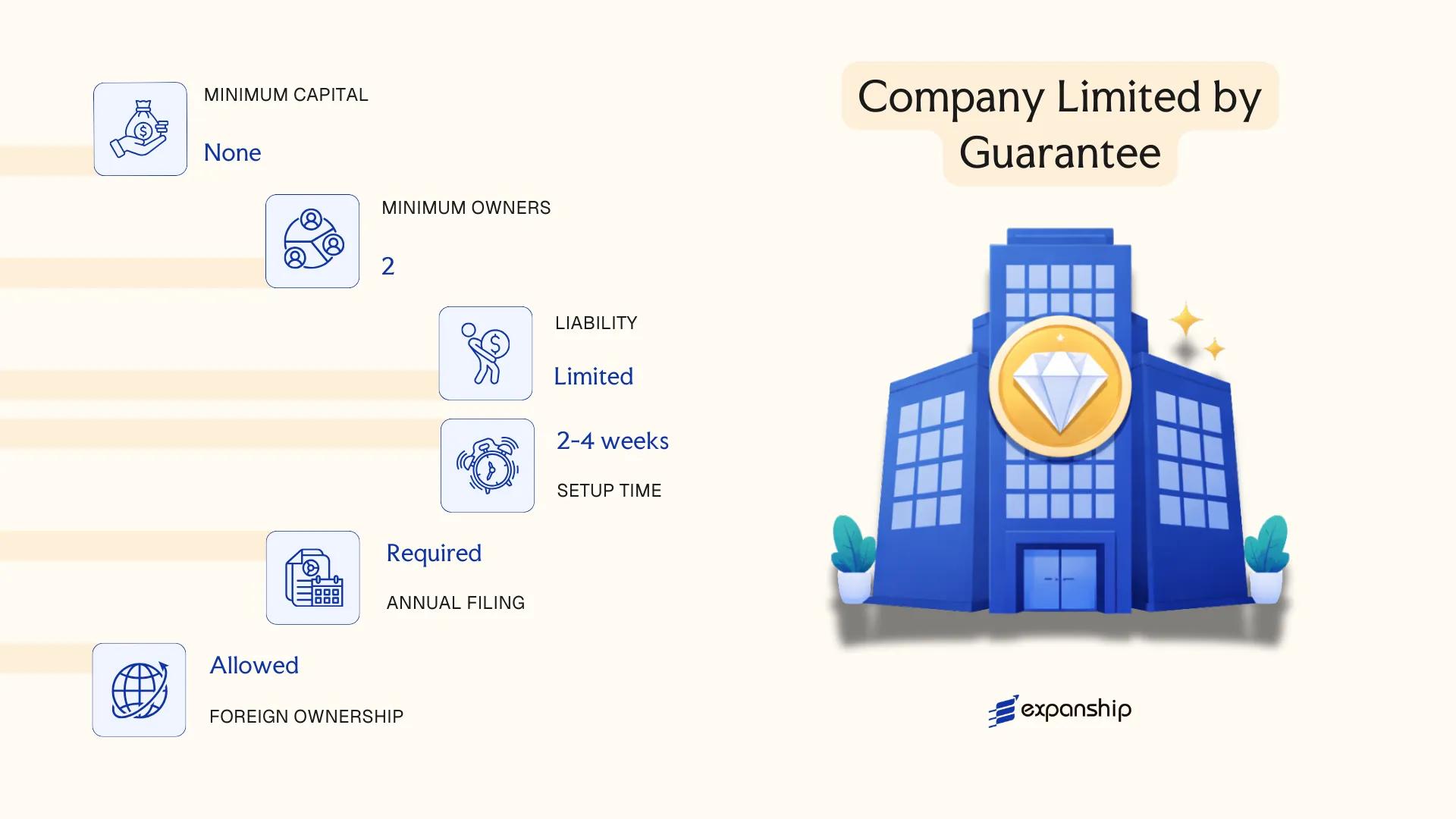
A company limited by guarantee Malawi legislation recognises is incorporated under the Companies Act 1984 (Cap. 46:03) as a distinct legal entity with separate personality from its members. Rather than issuing share capital, this structure requires each member to guarantee a fixed sum, payable only upon winding up if the company's assets are insufficient to meet its liabilities.
Organisations with no profit distribution objective, such as charities, professional associations, and community welfare bodies, typically adopt this structure. The non-profit company structure Malawi recognises under this form prohibits dividend payments to members, making it suitable where income must be applied solely toward stated objects.
Key Characteristics
| Requirement | Detail | Notes |
|---|---|---|
| Legal Form | Body corporate | Separate legal personality; liability capped at guaranteed amount |
| Members | Minimum 1; no maximum | Referred to as members, not shareholders |
| Directors | Minimum 1 | Must be a natural person; no statutory residency requirement under general rules |
| Local Presence | Registered office in Malawi | Physical address required; P.O. Box alone is insufficient |
| Capital | No share capital; guarantee amount typically MWK 1–100 per member | Guarantee sum stated in the memorandum |
| Privacy | Directors and members appear in public registry filings | No statutory mechanism for suppressing member names |
Focus Points
- Taxation: Exempt from corporate income tax if registered as a charitable or non-profit body with the Malawi Revenue Authority; VAT registration required if annual turnover exceeds the statutory threshold; donations may attract stamp duty depending on instrument type.
- Annual Compliance: Annual returns must be filed with the Registrar of Companies; audited financial statements are required where the organisation meets the prescribed size thresholds under the Act.
- NGO Registration: Entities operating as NGOs must additionally register with the NGO Regulatory Authority under the Non-Governmental Organisations Act 2000, a separate process from guarantee company registration Malawi's Companies Registry handles.
- Conversion: Conversion to a share-capital company is not permitted; the structure is intended as a permanent non-profit form.
- Treaty Access: Tax treaty benefits depend on whether the entity qualifies as a resident person under the relevant bilateral agreement; exempt bodies may face restricted access.
Closing
This entity suits membership associations, industry regulators, foundations, and civil society organisations where accumulated funds must serve a public or collective purpose rather than generate shareholder returns. The clear liability cap protects individual members, though the prohibition on profit distribution rules out any future commercialisation of the business.
Organisations such as professional bodies, charities, and community associations that require corporate status without a profit distribution mechanism.
Unlimited Company
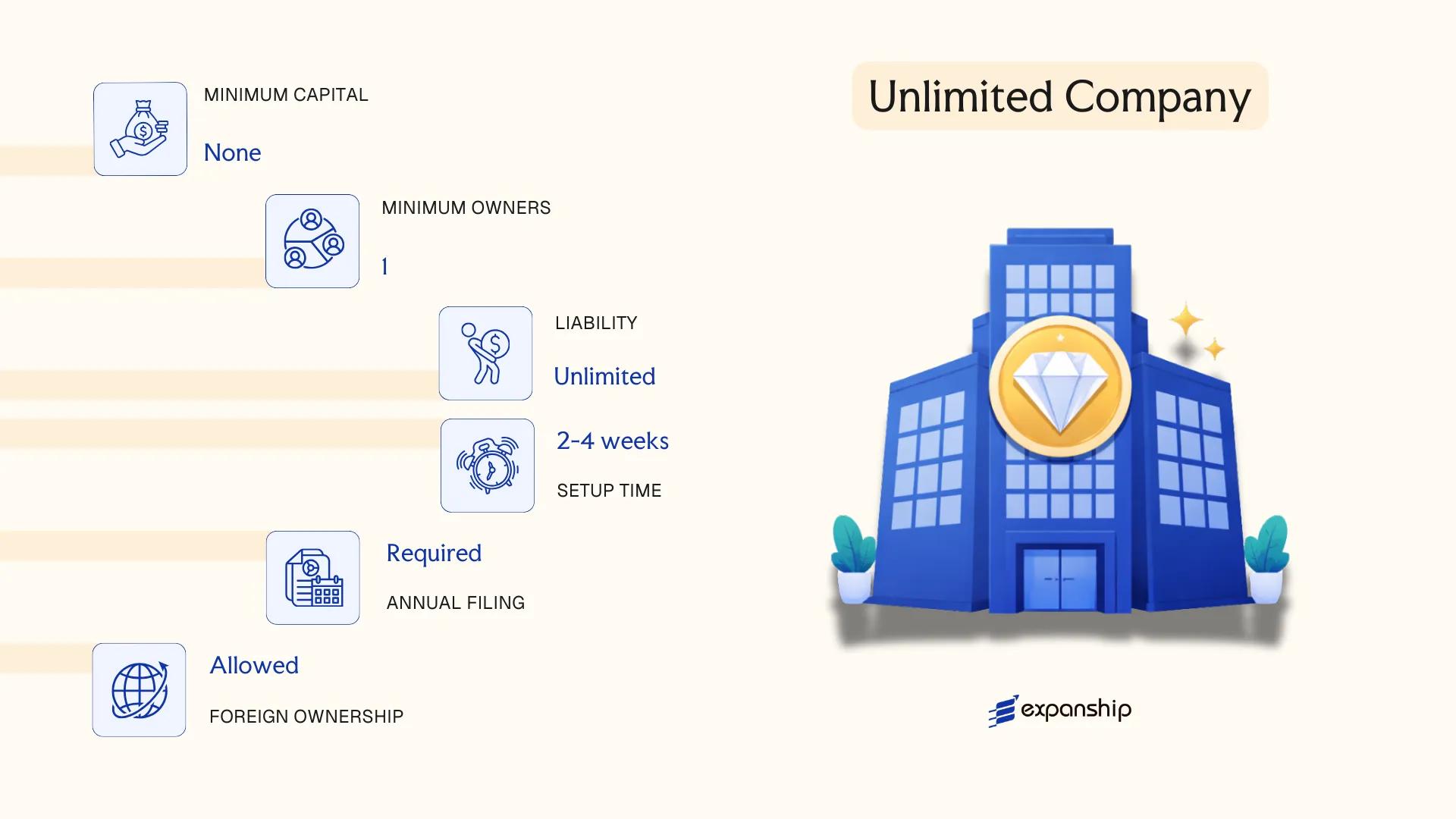
Unlimited company registration Malawi follows the same foundational legislation as other registered entities: the Companies Act 2013, administered by the Registrar General under the Ministry of Justice. Unlike its limited liability counterparts, an unlimited company carries no statutory cap on member liability — shareholders remain personally responsible for all debts and obligations of the business, without restriction.
This structure retains separate legal personality, meaning the company can sue, be sued, and hold assets in its own name. The absence of a liability ceiling is the defining characteristic of the Malawi unlimited liability company, and this feature directly shapes both its practical utility and the profile of those who choose it.
Key Characteristics
| Requirement | Detail | Notes |
|---|---|---|
| Legal Form | Unlimited Company | Separate legal entity; members bear unlimited personal liability for company debts |
| Members | Minimum 1 shareholder; no statutory maximum | Shareholders may be natural persons or corporate entities |
| Directors | Minimum 1 director | No statutory residency requirement under the Companies Act 2013 |
| Local Presence | Registered office address required in Malawi | Must be a physical address; P.O. Box alone is not sufficient |
| Share Capital | No minimum capital prescribed | Shares may or may not have a nominal value |
| Privacy | Accounts may not require public disclosure | One practical reason this structure is occasionally selected over limited forms |
Focus Points
- Taxation: Subject to standard corporate income tax at 30% for resident companies; VAT registration applies if turnover meets the threshold; withholding tax and stamp duty obligations follow general rules applicable to all companies.
- Annual Compliance: Must file annual returns and financial statements with the Registrar General; audit requirements follow standard company rules.
- Conversion: The Companies Act 2013 permits conversion between company types, including from unlimited to limited liability, subject to prescribed procedures and member consent.
- Treaty Access: As a locally registered entity, the company may access tax treaties to which Malawi is a party, subject to applicable conditions.
- Restrictions: No statutory restriction on trading activities, but the unlimited liability exposure makes this structure unsuitable where significant third-party debt is anticipated.
Closing
An unlimited company structure under the Malawi Companies Act suits scenarios where financial privacy is prioritised over liability protection, or where the entity will not carry significant external debt. The key drawback is unambiguous: member assets are fully exposed should the company become insolvent.
This structure is most appropriate for closely held entities or family arrangements where members are willing to accept personal liability in exchange for reduced disclosure obligations.
Partnerships in Malawi [General Partnership, Limited Partnership]
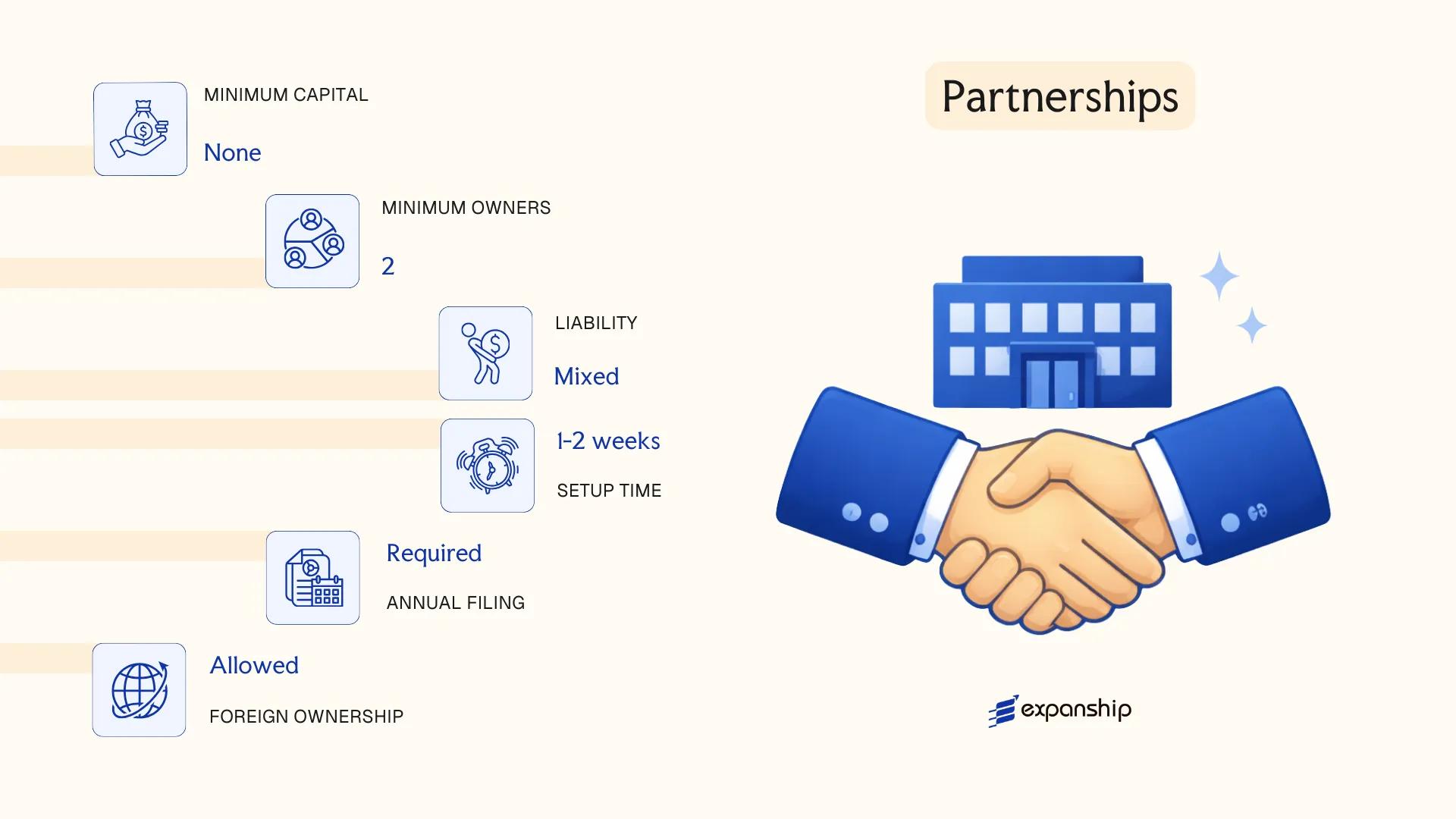
Partnership registration in Malawi is governed primarily by the Partnership Act (Cap. 46:01 of the Laws of Malawi). A partnership does not constitute a separate legal person distinct from its members, which means partners bear direct exposure to the firm's obligations under general law.
Two principal forms exist: the general partnership and the limited partnership. Each carries different liability profiles, making the choice of structure consequential for how obligations are distributed among partners.
Key Characteristics
| Requirement | General Partnership | Limited Partnership |
|---|---|---|
| Members | Partners (minimum 2, no statutory maximum for most sectors; banking capped by separate legislation) | At least 1 general partner and 1 limited partner |
| Liability | Unlimited; all partners jointly liable for firm debts | General partners: unlimited; limited partners: capped at capital contribution |
| Legal Personality | None; partnership is not a separate legal entity | None |
| Registration Body | Registrar General, Ministry of Justice | Registrar General, Ministry of Justice |
| Local Presence | Principal place of business required within Malawi | Principal place of business required within Malawi |
| Capital | No statutory minimum; denominated in Malawian Kwacha (MWK) | No statutory minimum; limited partner's contribution must be defined and recorded |
Focus Points
- Taxation: Partnerships are fiscally transparent; income is attributed to individual partners and taxed at their applicable personal or corporate income tax rates, with no entity-level corporate tax; VAT registration obligations apply if turnover thresholds are met; withholding tax applies to certain payments made by the partnership.
- Annual Compliance: Partners are required to file annual returns with the Registrar General; tax returns are filed individually by each partner through the Malawi Revenue Authority (MRA).
- Restrictions: Foreign nationals seeking to participate in a partnership conducting business in Malawi must comply with the Malawi Investment and Trade Centre (MITC) licensing requirements and applicable immigration rules.
- Conversion: A partnership may convert to a limited liability company under the Companies Act 2013, though this requires a formal re-registration process with the Registrar General.
Sub-Types
General Partnership
All partners hold equal management authority and carry unlimited joint liability for the firm's debts and obligations unless the partnership deed provides otherwise. This form is used most commonly by professional service firms such as law offices and accounting practices.
Limited Partnership
One or more limited partners contribute capital but take no active role in management; exercising management rights causes a limited partner to lose liability protection. This structure suits investment arrangements where passive contributors require defined risk exposure.
A partnership suits smaller professional practices or joint ventures where administrative simplicity outweighs the need for liability protection. The absence of a separate legal personality is the structure's most material drawback, as it leaves general partners personally exposed to the firm's liabilities without recourse to a corporate shield.
Partnerships in Malawi are best suited for professional practitioners or domestic joint ventures seeking a low-overhead operating structure with shared management and transparent taxation.
Foreign Business Entities in Malawi [Branch Office, Representative Office, External Company]
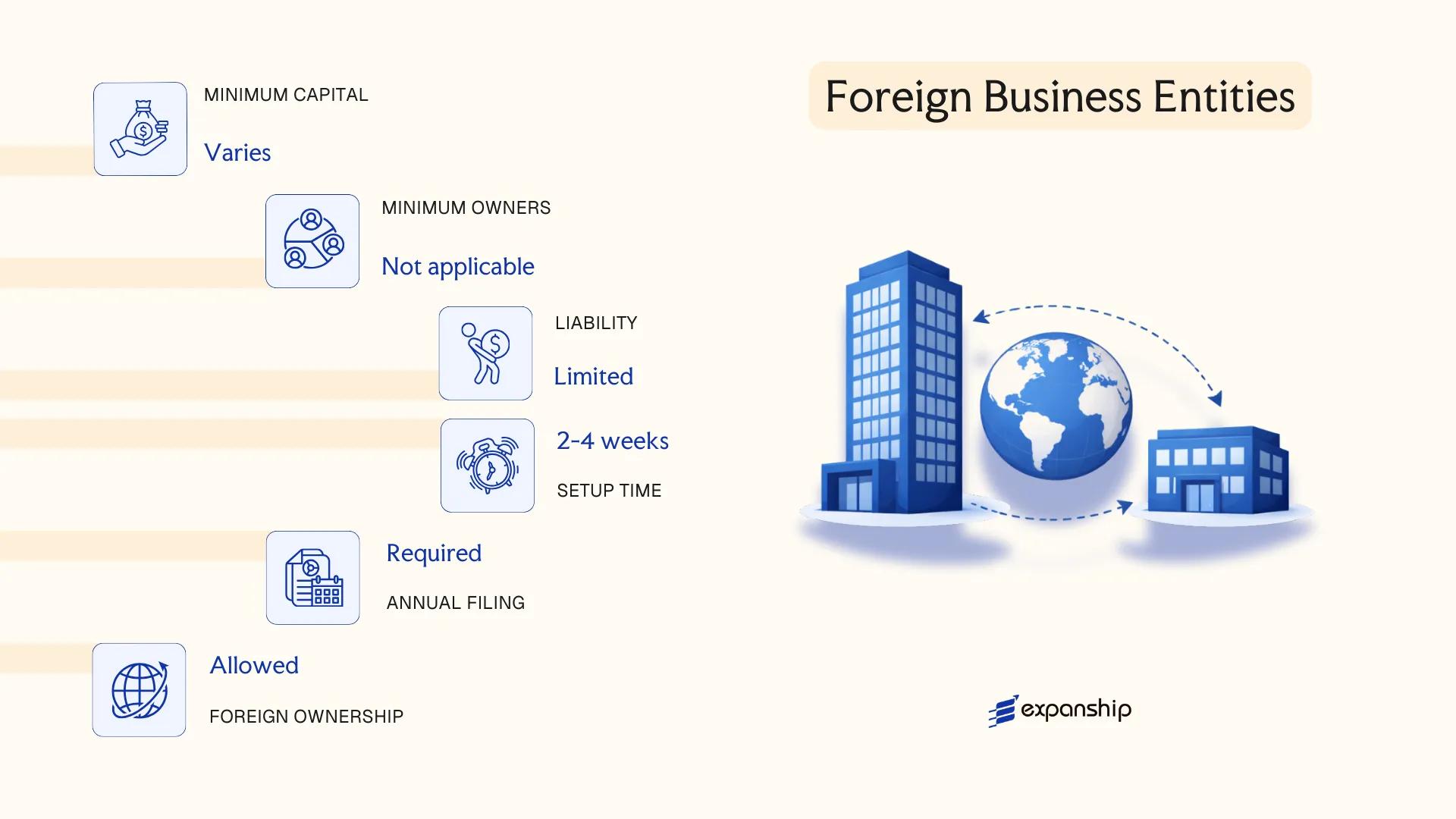
Foreign company registration in Malawi is governed primarily by the Companies Act 2013, which establishes the framework under which overseas businesses may operate within the country. A foreign entity operating here does not automatically acquire a separate local legal personality — it remains an extension of the parent company incorporated abroad.
Under Part XXII of the Companies Act 2013, any foreign business that establishes a place of business or carries on business in Malawi must register as an external company with the Registrar of Companies. Failure to register within one month of establishment can result in penalties for the entity and its officers.
Key Characteristics
| Requirement | Detail | Notes |
|---|---|---|
| Legal Form | External company / Branch of foreign parent | No separate legal personality; parent remains liable |
| Authorized Representatives | Local agent or authorized representative | Must be resident in Malawi |
| Local Presence | Registered local address required | Must be a physical address, not a PO Box |
| Capital | No prescribed minimum | Parent company's capital structure applies |
| Disclosure | Parent company's constitutional documents and financials must be filed | Ongoing disclosure obligations apply |
| Privacy | Moderate | Filed documents are publicly accessible via the Registrar |
Focus Points
- Taxation: External companies are subject to corporate income tax on Malawi-sourced income at the standard rate; withholding tax applies to dividends, interest, and royalties remitted to the parent; VAT registration is required if turnover thresholds are met.
- Annual Compliance: Annual returns and audited financial statements of both the local operations and the parent must be filed with the Registrar of Companies.
- Treaty Access: Malawi has a limited network of double taxation agreements; treaty benefits depend on the parent's jurisdiction of incorporation.
- Restrictions: Certain sectors, including retail trade, are reserved for Malawian citizens, which may restrict the scope of activities an external company can undertake.
- Conversion: An external company can convert into a locally incorporated entity, but this requires a separate incorporation process rather than a simple re-registration.
Sub-Types
Branch Office
A branch office is the most operationally active form of external company presence. It can enter into contracts, generate revenue, and employ staff directly, but all liabilities flow back to the foreign parent with no liability shield between the two.
Representative Office
A representative office is limited to non-commercial activities such as market research, liaison, and promotional work on behalf of the parent. It cannot invoice clients or generate direct revenue in Malawi, making it a preparatory rather than operational structure.
When to Use This Structure
An external company structure suits foreign businesses that need an established operational foothold without undergoing full local incorporation, though the unlimited liability exposure of the parent company is a significant structural drawback.
Foreign entities in this structure are best suited for multinational firms conducting short-to-medium-term projects or testing market conditions before committing to full local incorporation.
Sole Proprietorship (Sole Trader)
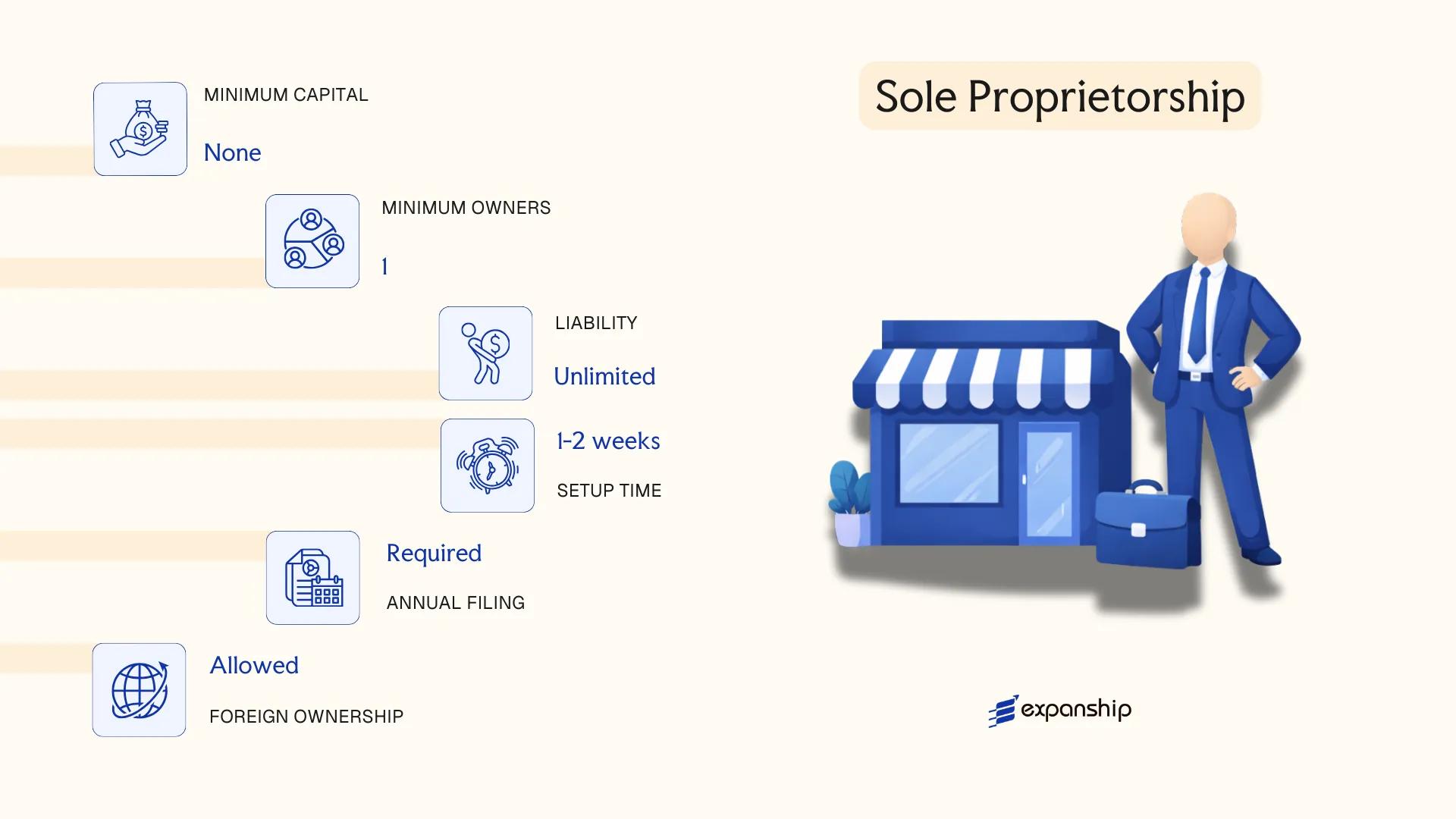
Sole proprietorship registration in Malawi operates under the Registration of Business Names Act, which requires any individual trading under a name other than their own to register that business name with the Registrar General. Unlike incorporated entities, a sole proprietorship carries no separate legal personality — the owner and the business are legally one and the same.
This means you bear unlimited personal liability for all debts and obligations incurred in the course of trade. There is no minimum capital requirement, and setup is comparatively straightforward, making this structure common among micro-enterprises and individual traders operating in the domestic market.
Key Characteristics
| Requirement | Detail | Notes |
|---|---|---|
| Legal Form | Unincorporated business | No separate legal personality from the owner |
| Owner Reference | Sole proprietor / sole trader | Single individual; no co-owners, no shareholders |
| Membership | One natural person only | Cannot be held by a corporate entity |
| Local Presence | Physical business address required | Must be a registrable address within Malawi |
| Capital | No statutory minimum | Owner funds the business from personal resources |
| Privacy | Business name and owner details on public register | Registered with the Registrar General |
Focus Points
- Taxation: Subject to personal income tax under the Malawi Revenue Authority's PAYE or self-assessment regime; VAT registration is mandatory once turnover exceeds the prescribed threshold; no separate corporate tax applies.
- Annual Compliance: Business name registration must be renewed periodically with the Registrar General; failure to renew can result in deregistration.
- Conversion: A sole proprietorship can be converted into a private limited company by incorporating a new entity and transferring business assets; there is no automatic conversion mechanism.
- Treaty Access: As an unincorporated individual trader, access to double tax treaty benefits is limited and depends on personal tax residency status.
- Restrictions: Cannot raise equity capital from investors or issue shares; expansion through external funding is structurally constrained.
Recommendations
A sole proprietorship suits individual traders, freelancers, and small service providers operating locally without the need for external investment or liability protection. The key advantage is minimal administrative burden; the primary drawback is full personal exposure to business liabilities.
Local individual traders and self-employed professionals seeking a low-cost entry point into the Malawian market without corporate formalities.
How to Choose the Right Entity Type in Malawi
Knowing how to choose a business structure in Malawi requires more than a preference for limited liability. The decision carries regulatory, tax, and operational consequences that become difficult to reverse once the entity is registered.
Why Your Entity Choice Matters
Selecting the wrong structure creates concrete problems:
- Registering an external company when you intend to conduct active local trade — rather than merely liaising — places you in breach of the Companies Act 2013, which can result in deregistration or financial penalties.
- Choosing a tax-exempt entity when you need access to double taxation agreements means you cannot claim reduced withholding tax rates under those treaties.
- Forming a company when your purpose is asset protection or estate planning locks you into annual shareholder obligations, statutory filings, and audit requirements that would not apply under alternative structures.
- Selecting an entity that mandates audited financial statements for a single-person consultancy introduces recurring costs with no corresponding regulatory benefit.
Key Factors to Consider
- Business Activity: Active trading, passive asset-holding, and regulated sectors such as banking or insurance each require different structures under Malawian law.
- Ownership and Management: Single-owner operations may suit a sole proprietorship or private limited company, while multi-party arrangements may require a partnership agreement or formal board structure.
- Tax Objectives: Your need for full exemption, treaty access, or eligibility under a specific regime directly determines which entity qualifies.
- Substance Capacity: If you cannot maintain a physical presence, employees, or local decision-making, your entity choice must reflect that constraint.
- Exit Strategy: Not all structures permit redomiciliation or conversion; confirm whether the entity type allows winding up or restructuring before registering.
Compliance Services for Companies in Malawi
Ongoing compliance support for Malawian entities, including annual returns, statutory filings, and regulatory obligations under the Companies Act 2013.
Conclusion
Selecting the right structure is one of the more consequential decisions in any starting a business in Malawi guide, because the choice affects liability exposure, tax treatment, and ongoing compliance obligations under the Companies Act 2013 and the Business Registration Act.
The private limited company (Ltd) remains the most registered entity type, favored by resident and foreign investors alike for its liability protection and straightforward share structure. A PLC suits businesses planning to raise capital publicly; a company limited by guarantee serves membership-based or nonprofit purposes. Unlimited companies are uncommon outside specific professional arrangements. Partnerships offer simplicity but carry personal liability. For foreign firms testing the market, a registered branch or external company provides a direct foothold without establishing a separate legal entity.
Malawi's regulatory trajectory, guided by the Registrar General's Department, has moved toward digitized registration processes and broader investment treaty engagement, gradually reducing administrative friction for foreign-owned businesses.
How Expanship Can Assist You
Expanship's Malawi company formation services cover the full registration process — from selecting the right entity type under the Companies Act 2013 to filing with the Registrar General's Department. Whichever structure suits your goals, whether a Private Limited Company, branch office, or company limited by guarantee, your documentation and submissions are prepared to meet local requirements from the outset.
Beyond initial registration, Expanship supports the full scope of your corporate setup in Malawi:
- Document preparation and notarization
- Registered office and local agent provision
- Filing and liaison with the Registrar General's Department
- Post-incorporation compliance management, including annual returns
- Banking introduction assistance
Incorporate in Malawi with expert help from a team that handles the procedural requirements directly, so your business is properly established without gaps in compliance from day one.
Contact Expanship Malawi to discuss your incorporation requirements.
Frequently Asked Questions (FAQ)
The private limited company (Ltd) is the most frequently registered structure. Limited liability protection, a straightforward incorporation process under the Companies Act 2013, and suitability for both domestic operations and foreign-owned ventures make it the default choice for most business founders.
A branch is an extension of its foreign parent and carries no separate legal personality, while a private limited company is an independent legal entity under Malawian law. The private limited company is subject to corporate tax in Malawi on its locally sourced income, whereas a branch is taxed on profits attributable to its Malawian operations. Compliance obligations are broadly comparable, though a branch must file its parent company's audited accounts with the Registrar of Companies.
A company limited by guarantee does not issue shares, so no shareholder register reflecting ownership stakes is publicly associated with it. However, directors of all companies registered under the Companies Act 2013 are recorded with the Registrar. Nominee arrangements are legally permissible but do not override statutory disclosure requirements.
A private limited company can be formed by a single shareholder, and a sole proprietorship is by definition a one-person structure. General partnerships and limited partnerships require a minimum of two partners. A public limited company requires at least two shareholders and a more extensive governance framework.
Foreign individuals and foreign-owned entities may register a private limited company, public limited company, or company limited by guarantee under the Companies Act 2013. Alternatively, a foreign firm may register as an external company, operate a branch, or establish a representative office. All foreign-owned entities must comply with the Malawi Investment and Trade Centre (MITC) requirements and sector-specific licensing where applicable.
The Companies Act 2013 provides mechanisms for re-registration, allowing a private limited company to convert to a public limited company and vice versa. Conversion between fundamentally different structures, such as from a partnership to a limited company, generally requires dissolution of the original entity and fresh incorporation rather than a direct continuation procedure.
No. A private limited company, public limited company, company limited by guarantee, and external company each possess separate legal personality under the Companies Act 2013. Sole proprietorships, general partnerships, and limited partnerships do not, meaning owners bear personal liability for business obligations incurred by those structures.
Legal Disclaimer
The information provided in this article is for general informational purposes only and does not constitute legal, tax, or professional advice. While we strive to ensure the accuracy and timeliness of the content, laws and regulations are subject to change, and the application of laws can vary widely based on specific facts and circumstances.
Readers should not act upon this information without seeking professional counsel tailored to their individual situation. Expanship and its authors disclaim any liability for actions taken or not taken based on the content of this article.
For specific advice regarding your business setup, compliance requirements, or any legal matters, please consult with qualified legal and tax professionals in the relevant jurisdiction.