
Key Takeaways
- Cabo Verde's commercial registry is maintained by the Conservatória do Registo Comercial, operating within a civil law system shaped by Portuguese legislative tradition.
- The Sociedade por Quotas is the most commonly registered structure among both domestic and foreign investors, making it the default choice for private limited company formation in Cabo Verde.
- Partnership structures such as the Sociedade em Nome Colectivo and Sociedade em Comandita forms remain suitable only for closely held businesses where partners are prepared to accept personal liability.
- Branch and representative offices allow foreign companies to establish a local presence in Cabo Verde without incorporating a separate legal entity under Cabo Verdean law.
Introduction to Entity Types in Cabo Verde
Cabo Verde is an archipelago nation in the central Atlantic Ocean, located approximately 570 kilometres west of the Senegalese coast. It has been an independent republic since 1975 and operates under a civil law legal system influenced by Portuguese legislative tradition.
Company registration and corporate compliance fall under the oversight of the Casa do Cidadão and the broader framework administered through the Conservatória do Registo Comercial, which maintains the official commercial registry. The general tax posture is territorial, with a standard corporate income tax rate applied to domestic-source income.
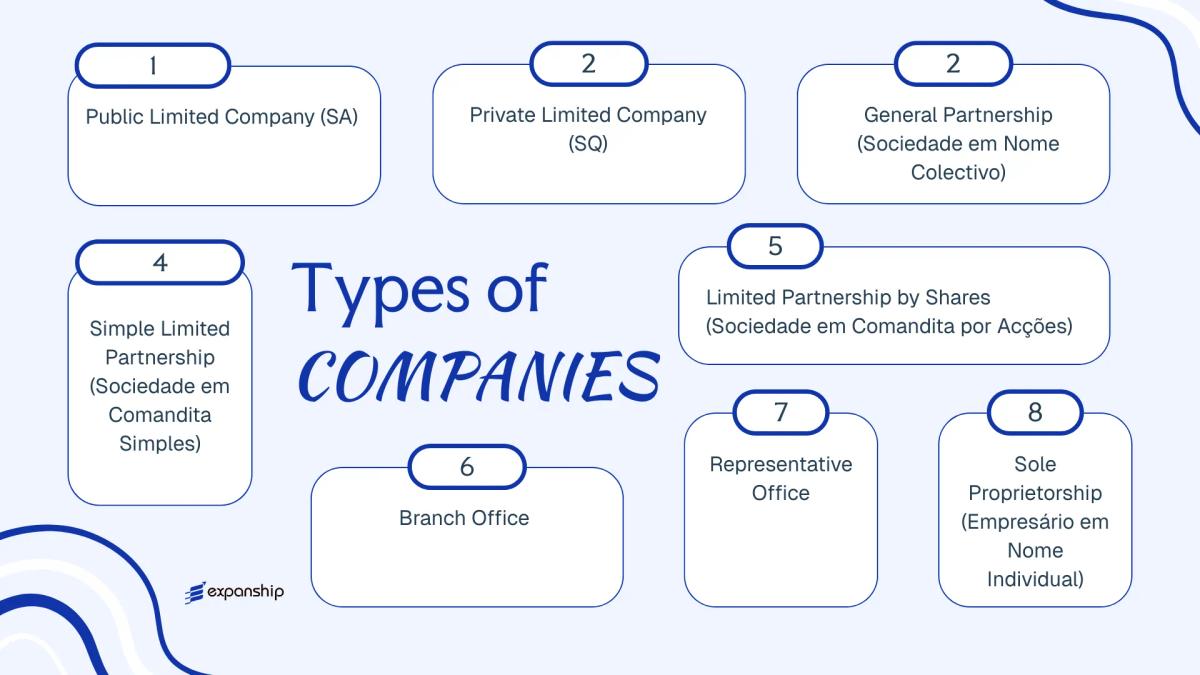
Businesses operating in or from the country can form under several distinct legal structures: Sociedade Anónima (SA), Sociedade por Quotas (SQ), Sociedade em Nome Colectivo, Sociedade em Comandita Simples, Sociedade em Comandita por Acções, Branch Office, Representative Office, and Empresário em Nome Individual.
Each structure carries different requirements around capital, liability, governance, and regulatory compliance. This article examines each of these business entity types in Cabo Verde in detail, covering formation requirements, ownership rules, and key operational considerations.
An Overview of Business Structures in Cabo Verde
Cabo Verde recognises several distinct legal business forms under its Commercial Companies Code (Código das Empresas Comerciais), enacted through Decree-Law No. 3/99 of 29 March 1999 and subsequently revised. This legislation establishes the framework for Cabo Verde company registration options, defining each structure's governance rules, liability regime, and capital requirements. Each form serves a different commercial purpose, from closely held family businesses to publicly traded firms and foreign branch operations.
| Entity Type | Legal Form | Liability | Taxed / Exempt | Local Trading | Minimum Members | Regulatory Authority | Governing Act |
|---|---|---|---|---|---|---|---|
| Sociedade Anónima (SA) | Public Limited Company | Limited to shares | Taxed | Yes | 1 shareholder | CNAD / MFP | CEC Decree-Law 3/99 |
| Sociedade por Quotas (SQ) | Private Limited Company | Limited to quota | Taxed | Yes | 1 member | CNAD / MFP | CEC Decree-Law 3/99 |
| Sociedade em Nome Colectivo | General Partnership | Unlimited, joint | Taxed | Yes | 2 partners | CNAD / MFP | CEC Decree-Law 3/99 |
| Sociedade em Comandita Simples | Limited Partnership | Mixed liability | Taxed | Yes | 2 partners | CNAD / MFP | CEC Decree-Law 3/99 |
| Sociedade em Comandita por Acções | Partnership by Shares | Mixed liability | Taxed | Yes | 2 partners | CNAD / MFP | CEC Decree-Law 3/99 |
| Branch Office | Foreign Branch | Parent liable | Taxed on local income | Yes | Parent company | CNAD / MFP | CEC Decree-Law 3/99 |
| Representative Office | Liaison Office | Parent liable | Generally exempt | No | Parent company | CNAD / MFP | CEC Decree-Law 3/99 |
| Empresário em Nome Individual | Sole Proprietorship | Unlimited, personal | Taxed | Yes | 1 individual | CNAD / MFP | CEC Decree-Law 3/99 |
Each of these structures is examined in full in the sections below.
Sociedade Anónima (SA) — Public Limited Company
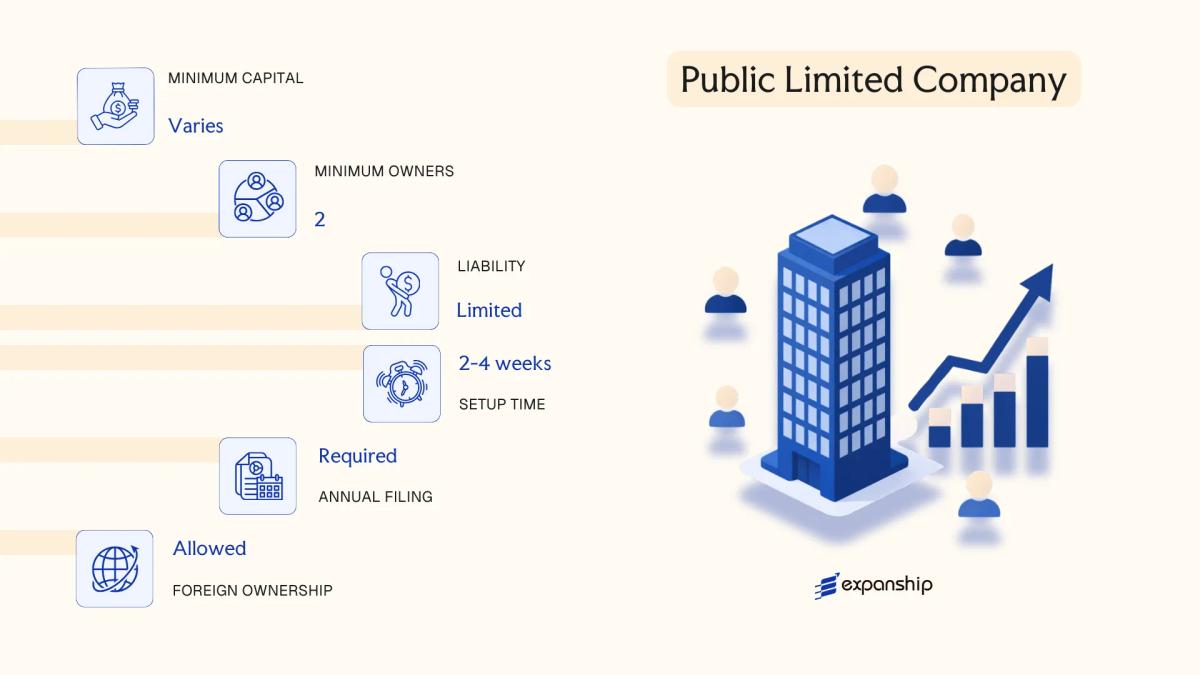
The Sociedade Anónima Cabo Verde SA is governed by the Código das Empresas Comerciais (Commercial Companies Code), which establishes it as a separate legal entity with full juridical personality. Shareholders bear liability only to the extent of their subscribed capital, meaning personal assets remain protected from corporate obligations.
Share capital is divided into transferable shares, making this structure suitable for businesses seeking external investment or eventual public listing. As a Cabo Verde public limited company, it sits at the more formal end of the corporate spectrum, with correspondingly stricter governance requirements.
Key Characteristics
| Requirement | Detail | Notes |
|---|---|---|
| Legal Form | Sociedade Anónima (SA) | Separate legal personality; limited liability |
| Members | Shareholders (minimum 5) | No statutory maximum; shares freely transferable |
| Governing Body | Board of Directors (Conselho de Administração); Supervisory Board (Conselho Fiscal) | Supervisory board mandatory for larger companies |
| Registered Office | Physical address in Cabo Verde required | Must be maintained for official correspondence |
| Share Capital | Minimum CVE 2,500,000 (approx. EUR 22,700) | At least 30% paid up at incorporation |
| Share Privacy | Nominee shareholders permissible | Beneficial ownership subject to disclosure rules |
Focus Points
- Taxation: Corporate income tax (IRPC) applies at the standard rate; VAT (IVA) obligations arise on taxable supplies; withholding taxes apply to dividends, interest, and royalties paid to non-residents — consult the Autoridade Tributária e Aduaneira (AT) for current rates.
- Annual Compliance: Audited financial statements required; accounts must be filed with the Registo Comercial; annual general meetings are mandatory.
- Economic Substance: No specific substance legislation modelled on OECD frameworks is currently in force, though physical presence requirements under the registered office rules apply.
- Treaty Access: Cabo Verde has a limited tax treaty network; confirm treaty eligibility before structuring cross-border flows through this entity.
- Conversion: An SA may be converted to a Sociedade por Quotas through a shareholder resolution and amendment of the articles, subject to regulatory approval.
Closing
The SA suits larger trading operations, holding structures, and businesses planning to raise capital from multiple investors or pursue public listing. The freely transferable share structure is its principal advantage; the higher minimum capital threshold and mandatory governance bodies create a compliance burden that smaller operations may find disproportionate.
The SA is most appropriate for mid-to-large enterprises, joint ventures with multiple shareholders, or businesses requiring an institutional-grade corporate structure for investment or financing purposes.

Company Incorporation in Cabo Verde
Expanship assists with SA formation, registered office provision, and ongoing compliance across Cabo Verde.
Sociedade por Quotas (SQ) — Private Limited Company
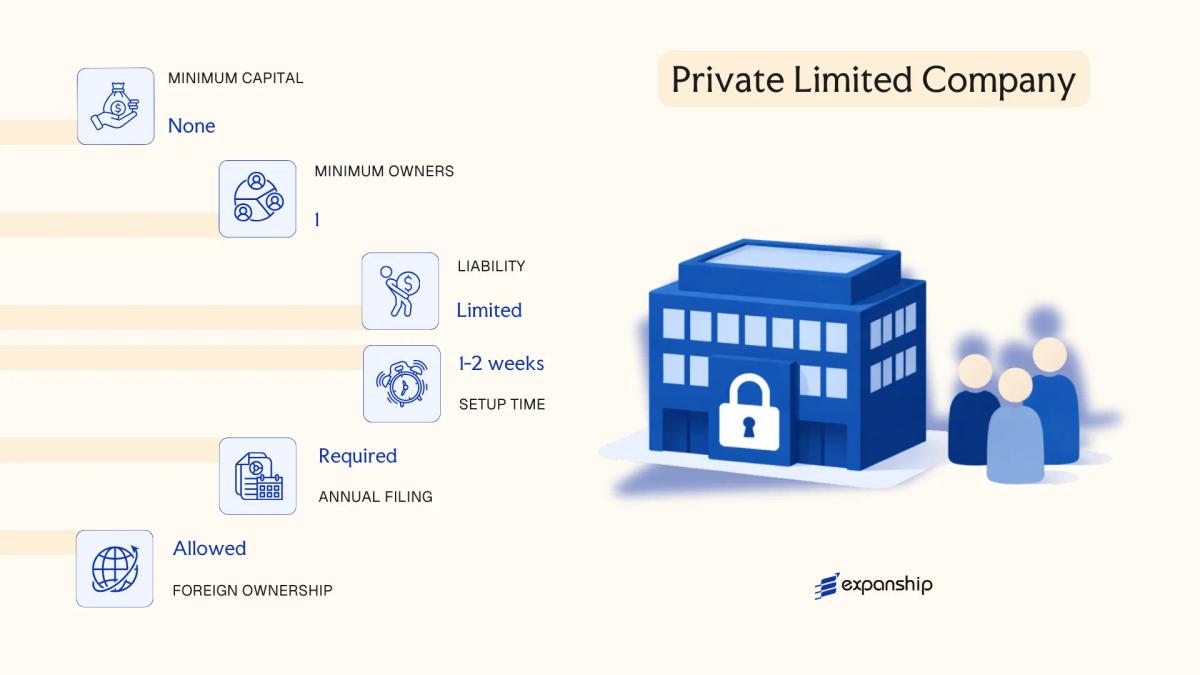
The Sociedade por Quotas Cabo Verde SQ is the most widely used commercial structure for small and medium-sized enterprises operating in the archipelago. Governed by the Código das Empresas Comerciais (Commercial Companies Code), this entity type carries separate legal personality, meaning the company exists independently from its members.
Liability is capped at each member's capital contribution. The SQ occupies a middle ground between a sole proprietorship and a public company, making it a practical choice for closely held businesses, joint ventures, and foreign-owned subsidiaries.
Key Characteristics
| Requirement | Detail | Notes |
|---|---|---|
| Legal Form | Private Limited Company (Sociedade por Quotas) | Separate legal personality; governed by the Código das Empresas Comerciais |
| Members | Referred to as quotaholders (sócios); minimum 1, maximum 30 | Single-member SQ permitted; members hold quotas, not shares |
| Management | One or more gerentes (managers) | Managers need not be members; no board of directors required |
| Local Presence | Registered office in Cabo Verde required | A registered address within the jurisdiction is mandatory |
| Capital | No statutory minimum capital under general rules; denominated in Cape Verdean Escudo (CVE) | Capital divided into quotas; each quota must have a defined nominal value |
| Privacy | Member names disclosed in public registry (Registo Comercial) | No bearer instruments; beneficial ownership is publicly traceable |
Focus Points
- Taxation: Corporate income tax (IRPC) applies at the standard rate; VAT (IVA) applies to taxable supplies; dividend distributions to non-residents may attract withholding tax under domestic rules, subject to any applicable double taxation agreement.
- Annual Compliance: Annual financial accounts must be filed with the tax authority (Direcção-Geral das Contribuições e Impostos) and the commercial registry.
- Economic Substance: No formal substance regime equivalent to some offshore jurisdictions, but active business operations are expected for tax residency purposes.
- Treaty Access: Cabo Verde has a limited tax treaty network; confirm treaty availability before structuring cross-border flows through an SQ.
- Conversion: An SQ may be converted to a Sociedade Anónima upon meeting the applicable capital and shareholder threshold requirements under the Commercial Companies Code.
Closing Paragraph
The SQ suits trading operations, service businesses, and foreign-owned subsidiaries where full public share issuance is unnecessary. Its streamlined management structure keeps administrative overhead low, though the 30-member cap restricts equity raises beyond a small investor group.
The SQ is best suited for foreign investors, SMEs, and entrepreneurs seeking limited liability within a straightforward, privately held structure without the compliance burden of a public company.
Partnerships in Cabo Verde [Sociedade em Nome Colectivo, Sociedade em Comandita Simples, Sociedade em Comandita por Acções]
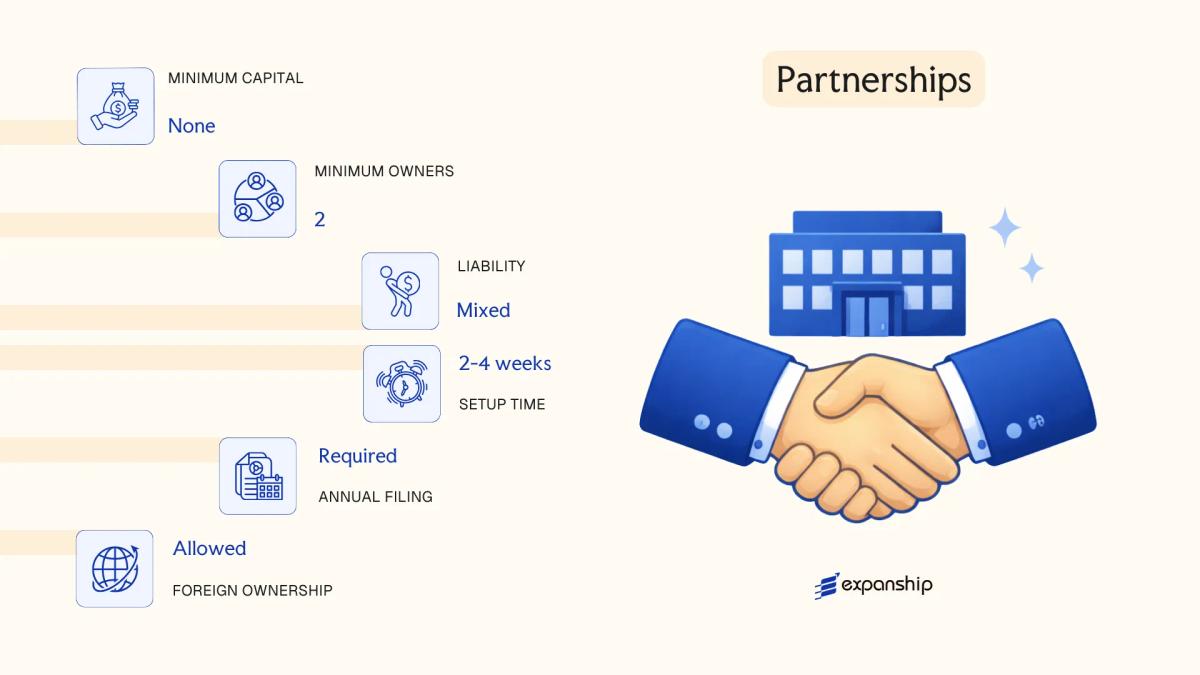
Cabo Verde recognises three partnership structures under the Código das Empresas Comerciais (CEC), the commercial companies code that governs all business entities registered in the archipelago. These partnership forms carry separate legal personality upon registration with the Registo Comercial, distinguishing them from informal arrangements, though the liability exposure across partner classes varies significantly by structure.
Partnership structures in Cabo Verde remain relatively uncommon in practice, as most investors opt for quota-based or share-based vehicles. That said, the framework exists and is fully operational for those whose commercial arrangements call for differentiated partner roles or blended liability profiles.
Key Characteristics
| Requirement | Detail | Notes |
|---|---|---|
| Legal Forms | Sociedade em Nome Colectivo, Sociedade em Comandita Simples, Sociedade em Comandita por Acções | Three distinct forms; each has different liability rules |
| Members | Partners (Sócios); minimum 2 for all forms | Comandita por Acções requires at least one general partner and shareholders for the capital portion |
| Liability | Unlimited for general partners (sócios gerentes/solidários); limited for commanditaries | Comandita Simples: mixed; Comandita por Acções: capital shareholders have limited liability |
| Registered Office | Physical address in Cabo Verde required | Must be maintained at all times |
| Capital | No statutory minimum prescribed for Nome Colectivo or Comandita Simples; Comandita por Acções follows share-capital rules | Capital denominated in Cape Verdean Escudo (CVE) |
| Privacy | Partner names appear in the Registo Comercial | Public disclosure applies to all registered partners |
Focus Points
- Taxation: Partnerships are generally subject to corporate income tax (IRPC) at the standard rate; VAT, withholding taxes on distributions, and stamp duty obligations apply in line with standard Cabo Verdean tax rules.
- Annual Compliance: Entities must file annual accounts with the Registo Comercial and submit tax returns to the Direcção Nacional das Receitas do Estado (DNRE).
- Restrictions: General partners in all three forms bear unlimited personal liability for entity debts, which represents a material exposure for individual partners.
- Conversion: Conversion to a quota-based or share-based entity is possible under the CEC, subject to regulatory filing and partner consent.
- Treaty Access: Cabo Verde has a limited but growing tax treaty network; partnership entities may access applicable treaties depending on residency and structure.
Sub-Types
Sociedade em Nome Colectivo
All partners bear joint and unlimited liability for the firm's obligations. This structure is suited to professional or family-run businesses where partners are willing to accept full personal exposure.
Sociedade em Comandita Simples
This form separates general partners, who hold unlimited liability, from commanditary partners, whose liability is capped at their contributed capital. It is used where silent or passive investors want defined exposure without operational involvement.
Sociedade em Comandita por Acções
The commanditary interest is divided into shares rather than quotas, enabling a broader capital base while retaining at least one fully liable general partner. This hybrid structure bridges the partnership and corporate forms.
Closing
Partnership vehicles in Cabo Verde are most relevant for professional service arrangements, family business succession, or investment structures requiring clearly tiered partner roles. The unlimited liability of general partners is a practical deterrent for most commercial investors.
These structures are best suited to closely held professional firms or family enterprises where the partners know each other well and the liability exposure of general partners is acceptable within the group.
Foreign Business Presence in Cabo Verde [Branch Office, Representative Office]
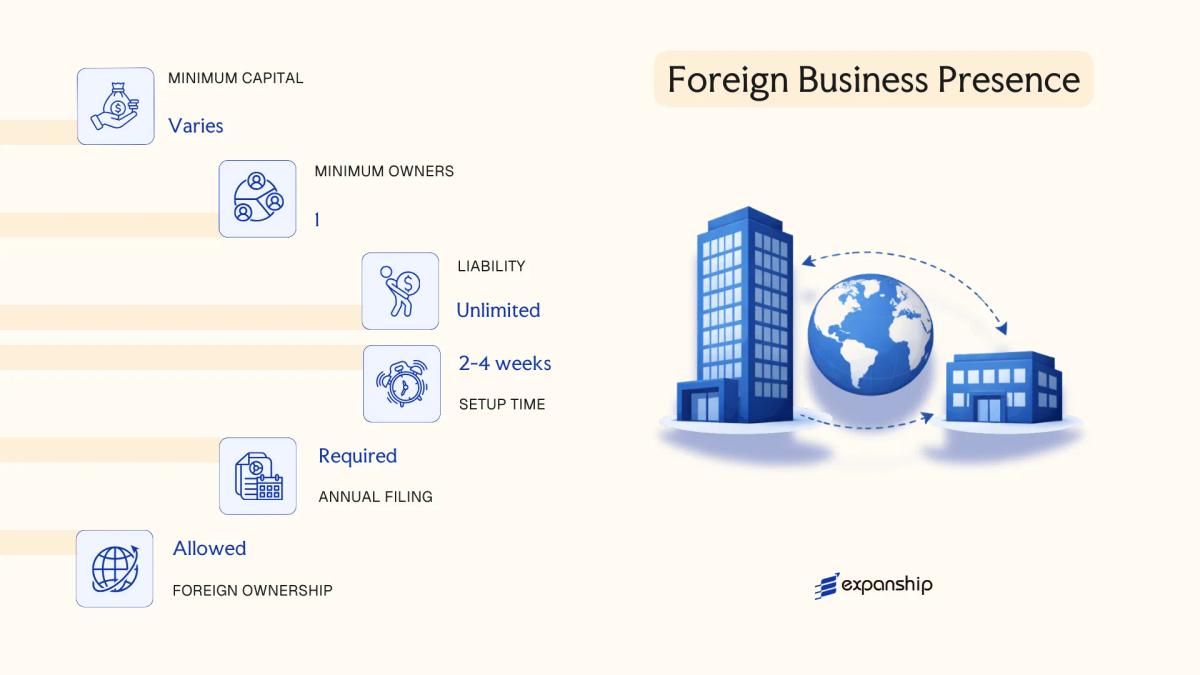
A foreign company branch office Cabo Verde registration is governed by the Commercial Companies Code (Código das Empresas Comerciais), which sets out the conditions under which foreign entities may operate locally without forming a separate domestic company. Both structural options covered here — the branch office and the representative office — are extensions of the parent entity rather than independent legal persons under Cape Verdean law.
Registration is handled through the Conservatória do Registo Comercial (Commercial Registry), and foreign firms must also register with the Agência para o Investimento e Exportações de Cabo Verde (AICEP CV) depending on the nature of their activities. Your parent company retains full legal and financial liability for the local presence.
Key Characteristics
| Requirement | Branch Office | Representative Office |
|---|---|---|
| Legal Personality | None — extension of parent | None — extension of parent |
| Liability | Parent bears full liability | Parent bears full liability |
| Permitted Activities | Commercial and operational activities | Liaison, market research, promotion only |
| Local Representative | Mandatory resident representative | Mandatory resident representative |
| Registered Address | Required in Cabo Verde | Required in Cabo Verde |
| Capital Requirement | No minimum local capital prescribed | No minimum local capital prescribed |
Focus Points
- Taxation: Branch profits are subject to corporate income tax (Imposto sobre o Rendimento das Pessoas Colectivas, IRPC) at the standard rate; VAT (Imposto sobre o Valor Acrescentado, IVA) applies to taxable supplies; withholding taxes apply to cross-border payments made to the parent.
- Revenue Generation: Representative offices cannot invoice clients or generate revenue in Cabo Verde; only branch offices may conduct income-producing operations.
- Annual Compliance: Both structures must file annual accounts with the Commercial Registry and submit tax returns through the Autoridade Tributária (AT).
- Treaty Access: Cabo Verde has a limited double taxation treaty network; confirm treaty applicability to your parent company's jurisdiction before structuring.
- Conversion: A branch may be converted into a locally incorporated entity, though the process requires formal dissolution of the branch registration and fresh incorporation.
Sub-Types
Branch Office (Sucursal)
A Sucursal conducts the same business activities as its parent and can enter contracts, employ staff, and generate revenue locally. It is the standard structure for foreign firms seeking an operational footprint without full incorporation.
Representative Office (Escritório de Representação)
This structure is restricted to non-commercial activities such as market research, promotional work, and liaison functions. It cannot sign commercial contracts on behalf of the parent or generate local turnover.
Closing Note
Both structures suit foreign firms testing the Cape Verdean market or managing specific project-based operations — the branch offers full commercial capacity, while the representative office limits local exposure but also restricts activity scope significantly.
Foreign companies seeking a controlled, non-incorporated entry point into Cabo Verde, particularly those in tourism, construction, or trade sectors with existing parent-company infrastructure.
Sole Proprietorship in Cabo Verde [Empresário em Nome Individual]
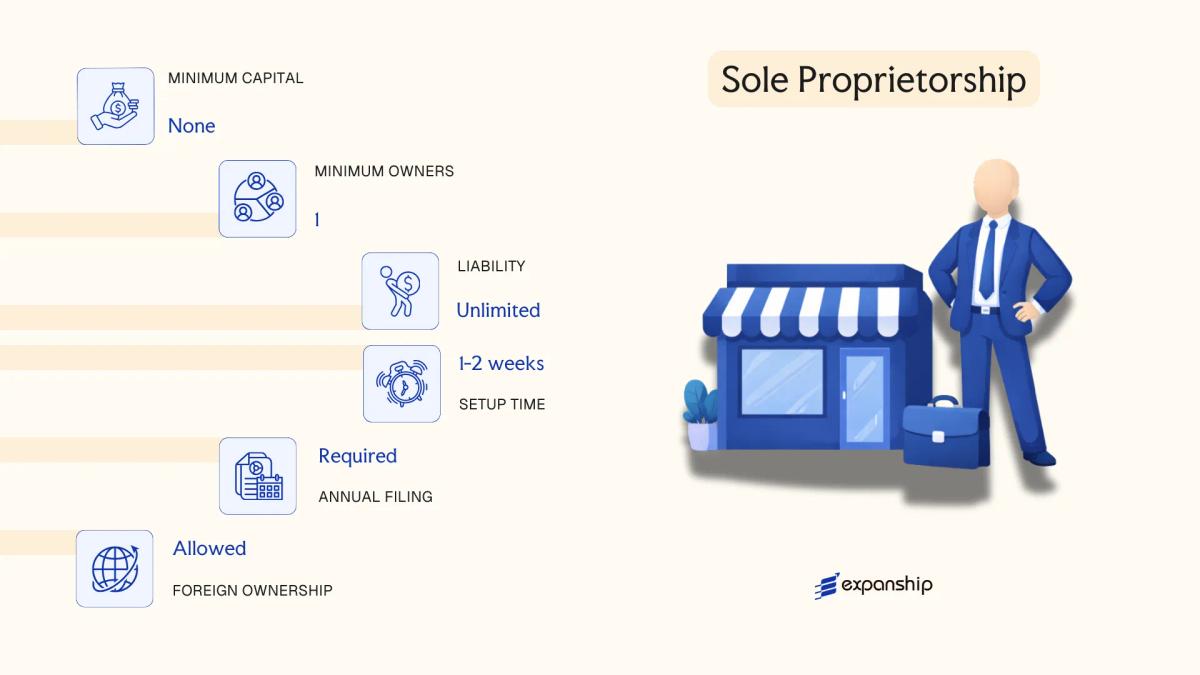
The Empresário em Nome Individual is the simplest business structure available under Cabo Verdean commercial law, governed primarily by the Código Comercial. Registration is handled through the Conservatória do Registo Comercial, and the business operates under the owner's personal identity rather than as a distinct legal entity.
There is no separation between the proprietor's personal assets and business liabilities. This means you bear unlimited personal liability for all debts and obligations the business incurs — a structural feature that distinguishes this form from capital-based entities such as the SQ or SA.
Key Characteristics
| Requirement | Detail | Notes |
|---|---|---|
| Legal Form | Sole proprietorship | No separate legal personality; the owner and business are legally the same |
| Member Designation | Proprietor (Empresário) | Single individual only; no partners or shareholders |
| Minimum Members | 1 (natural person) | Cannot be held by a legal entity |
| Local Presence | Registered business address in Cabo Verde | Must be declared upon registration with the Conservatória |
| Minimum Capital | No statutory minimum | Capital requirement is not prescribed for this structure |
| Liability | Unlimited personal liability | Personal assets are exposed to business creditors |
| Privacy | Owner's name forms part of the business identity | Limited name separation from personal identity |
Focus Points
- Taxation: Subject to personal income tax (Imposto sobre o Rendimento das Pessoas Singulares — IRPS) on business profits; VAT registration may be required depending on annual turnover thresholds; no corporate income tax applies.
- Annual Compliance: Annual income declaration required; bookkeeping obligations apply, though simplified accounting regimes may be available for lower-turnover operators.
- Conversion: Can be converted into a corporate entity such as an SQ, though the process requires a formal re-registration with the Conservatória do Registo Comercial.
- Restrictions: Foreign nationals seeking to register as an Empresário em Nome Individual may face residency or work authorisation requirements under Cabo Verdean law.
- Treaty Access: As a non-corporate entity, access to double taxation treaty benefits available to resident companies does not apply in the same manner.
Closing
This structure suits individual traders, freelancers, and micro-enterprise operators carrying out low-risk, low-capital activities where administrative simplicity outweighs the need for liability protection. The primary advantage is minimal setup cost and procedural straightforwardness; the principal limitation is full personal exposure to business debts with no liability shield.
Local sole traders and self-employed individuals in Cabo Verde operating small-scale service or trading activities who do not require a separate legal personality.
How to Choose the Right Entity Type in Cabo Verde
Choosing the right company type in Cabo Verde affects your tax position, liability exposure, reporting obligations, and long-term operational flexibility.
Why Your Entity Choice Matters
The consequences of an unsuitable structure are concrete and recoverable only at cost.
- Registering a foreign branch when local trading activity requires a fully incorporated entity can result in operating in breach of the Commercial Companies Code, exposing the firm to administrative penalties or forced dissolution.
- Selecting a structure without access to Cabo Verde's tax treaty network means withholding tax reductions available under bilateral agreements cannot be claimed, increasing the effective tax burden on cross-border payments.
- Choosing an entity that mandates statutory audit when your business is a single-person consultancy introduces recurring compliance costs that a Sociedade por Quotas with simplified accounting would not trigger at the same revenue threshold.
- Forming a capital-based company when your objectives are primarily estate planning locks you into annual shareholder meeting and reporting obligations that would not apply under a foundation or trust structure.
Key Factors to Consider
- Business Activity: Active trading, passive asset holding, and regulated sectors each point toward distinct entity structures under Cabo Verdean commercial law.
- Ownership and Management: Single-owner operations and multi-party ventures carry different governance requirements, particularly regarding board composition and decision-making authority.
- Tax Objectives: Your need for treaty access, sectoral tax incentives, or full exemption determines which entity qualifies under the applicable fiscal regime.
- Substance Capacity: If you cannot maintain a physical presence and local decision-making, choose a structure with lower or no substance thresholds.
- Exit Strategy: Not all Cabo Verdean entities permit redomiciliation or conversion; confirm that your chosen structure supports your intended exit mechanism before registration.
The primary legislation governing company formation is the Commercial Companies Code (Código das Empresas Comerciais), which sets out the legal requirements for each entity type.
Corporate Compliance Services in Cabo Verde
Maintain your company's standing with ongoing compliance support covering annual filings, statutory obligations, and regulatory reporting in Cabo Verde.
Conclusion
Incorporating a company in Cabo Verde means selecting from a defined set of structures governed primarily by the Commercial Code. Each form carries distinct implications for liability, governance, and operational scope. The Sociedade por Quotas suits small to medium private ventures with a limited number of shareholders, while the Sociedade Anónima fits larger operations requiring capital markets access or institutional investment. Partnership forms serve closely held businesses where personal accountability among partners is acceptable. Branch and representative offices give foreign firms a local presence without creating a separate legal entity, and the Empresário em Nome Individual remains the simplest route for sole operators.
The SQ is consistently the most registered structure among domestic and foreign investors alike. Regulatory oversight continues to consolidate under the Centro de Formalidades de Empresas framework, with ongoing efforts to digitize registration processes. Expanship's team works directly within this framework to support your formation requirements.
How Expanship Can Assist You
Expanship's company formation services in Cabo Verde cover the full process — from selecting between an SA and an SQ to registering your entity with the Conservatória do Registo Comercial and meeting the ongoing requirements set by the Agência para o Investimento e Comércio Externo de Cabo Verde (AICEP CV). Every structure discussed in this blog comes with distinct filing obligations, and Expanship works with you to meet them correctly from day one.
From document preparation to post-incorporation compliance, our service scope includes:
- Preparation and legalization of incorporation documents
- Registered agent and registered office provision
- Filing and liaison with the Conservatória do Registo Comercial
- Ongoing compliance management, including annual obligations
- Banking introduction assistance for newly incorporated entities
- Support for branch and representative office registration
Reach out to Expanship Cabo Verde to discuss your specific setup requirements.
Frequently Asked Questions (FAQ)
The Sociedade por Quotas (SQ) is the most frequently registered entity. Its lower capital threshold and simpler governance structure make it the practical default for small to medium-sized businesses operating domestically.
A Sociedade Anónima issues transferable shares and faces more rigorous disclosure and auditing requirements, while an SQ restricts quota transfers and carries lighter compliance obligations. For local trading, both structures hold equivalent rights, but the SA is better positioned for entities anticipating external investment or eventual public listing.
Among available structures, the SQ offers relatively more privacy since quota holders are not always subject to the same degree of public disclosure as SA shareholders. Nominee arrangements are permissible under Cabo Verdean law, subject to beneficial ownership registration requirements.
No. An SQ can be formed by a sole quotaholder, and an Empresário em Nome Individual is by definition a single-person structure. Partnerships, whether Sociedade em Nome Colectivo or either comandita form, require at least two partners by their legal definition.
Foreign nationals may incorporate an SA or SQ without restriction on nationality grounds. Branch offices and representative offices are also available to non-resident firms, though a branch must register with the Conservatória do Registo Comercial and appoint a local representative.
Conversion between entity types is generally permitted under Cabo Verdean commercial law. An SQ can be converted into an SA, provided the restructured entity meets the applicable minimum capital and shareholder requirements upon conversion.
The SA, SQ, and both comandita forms hold separate legal personality distinct from their members. The Empresário em Nome Individual does not — the proprietor and the business are legally the same person, meaning personal assets remain exposed to business liabilities.
Legal Disclaimer
The information provided in this article is for general informational purposes only and does not constitute legal, tax, or professional advice. While we strive to ensure the accuracy and timeliness of the content, laws and regulations are subject to change, and the application of laws can vary widely based on specific facts and circumstances.
Readers should not act upon this information without seeking professional counsel tailored to their individual situation. Expanship and its authors disclaim any liability for actions taken or not taken based on the content of this article.
For specific advice regarding your business setup, compliance requirements, or any legal matters, please consult with qualified legal and tax professionals in the relevant jurisdiction.